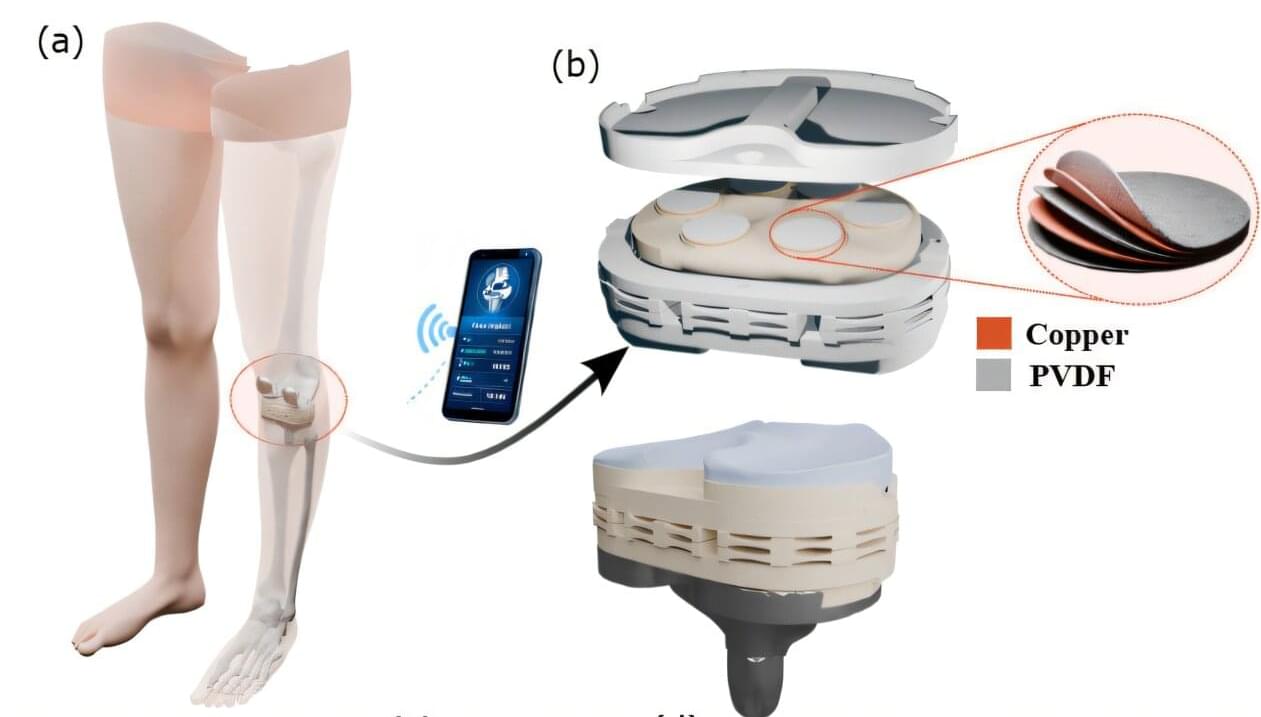
If you have a knee replacement, imagine pointing your phone at your knee and pulling up an app that tells you how much stress the artificial joint is experiencing. Knowing the activities that cause the biggest problems—which can lead to a second replacement surgery—would be invaluable. Research led by Binghamton University is closer to making this technology a reality.
Professor Shahrzad “Sherry” Towfighian—a faculty member from the Thomas J. Watson College of Engineering and Applied Science’s Department of Mechanical Engineering—has worked toward “smart-knee” tech over the past decade.
According to the American College of Rheumatology, nearly 800,000 total knee replacements are done every year in the U.S., and that number is expected to rise sharply by 2030 as the population ages and sports injuries become more common.