Quantum technologies like quantum computers are built from quantum materials. These types of materials exhibit quantum properties when exposed to the right conditions. Curiously, engineers can also trigger quantum behavior by manipulating a material’s structure; for example, by stacking layers of graphene on top of each other and twisting them to create a moiré pattern, which suddenly turns them into a superconductor.
The layers can be arranged in increasingly complex ways all the way to quasicrystals and super-moiré materials. The fundamental problem is that scientists must first calculate the properties of potential new materials to predict if they could be useful. Quasicrystals, for example, are so complex they can require processing more than a quadrillion numbers—far beyond the capacity of the world’s most powerful supercomputers.
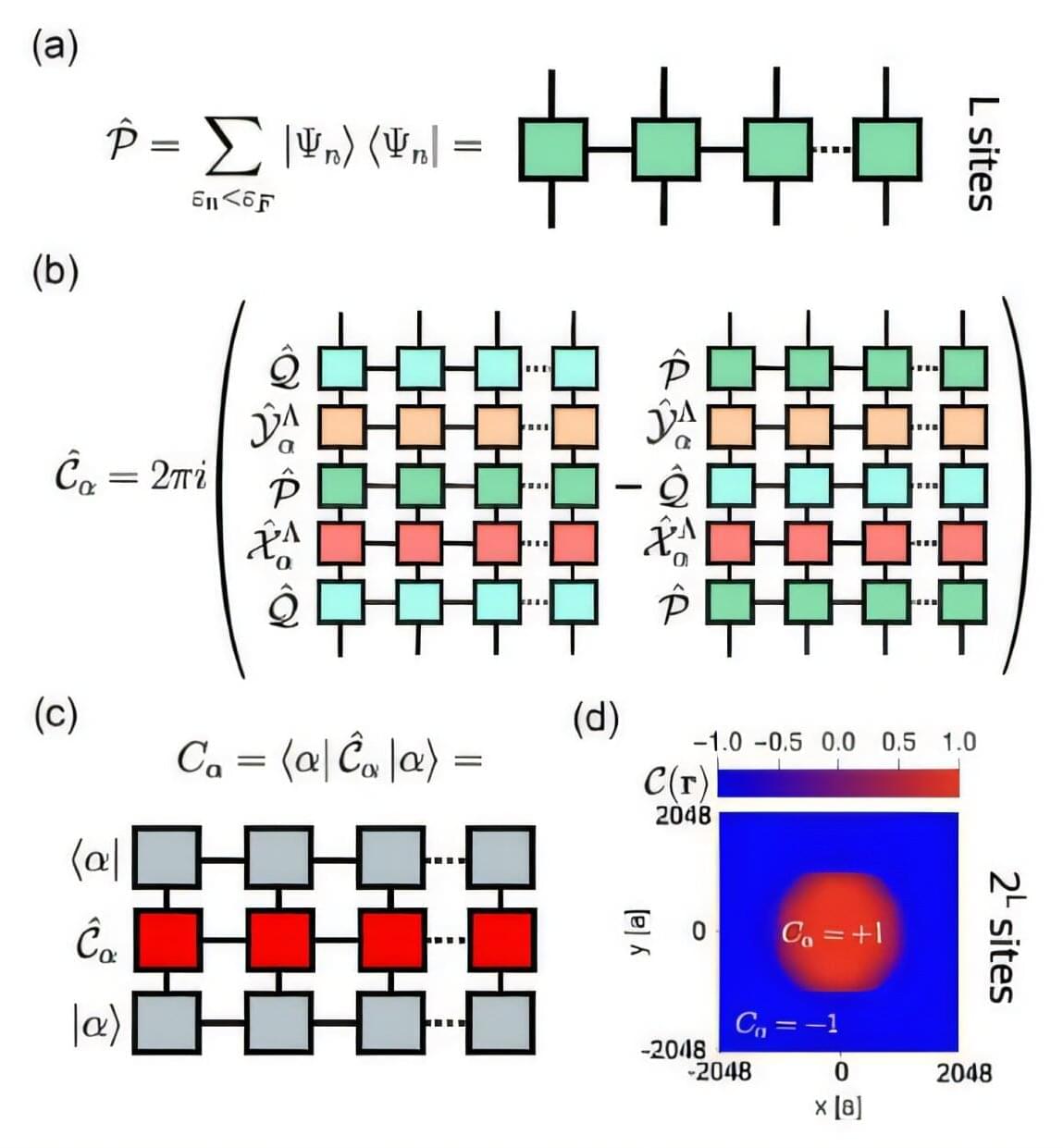
Now researchers at Aalto University’s Department of Applied Physics have shown how a quantum-inspired algorithm makes solving these colossal, non-periodic quantum materials possible in a heartbeat. The research is published in the journal Physical Review Letters as an Editor’s suggestion.