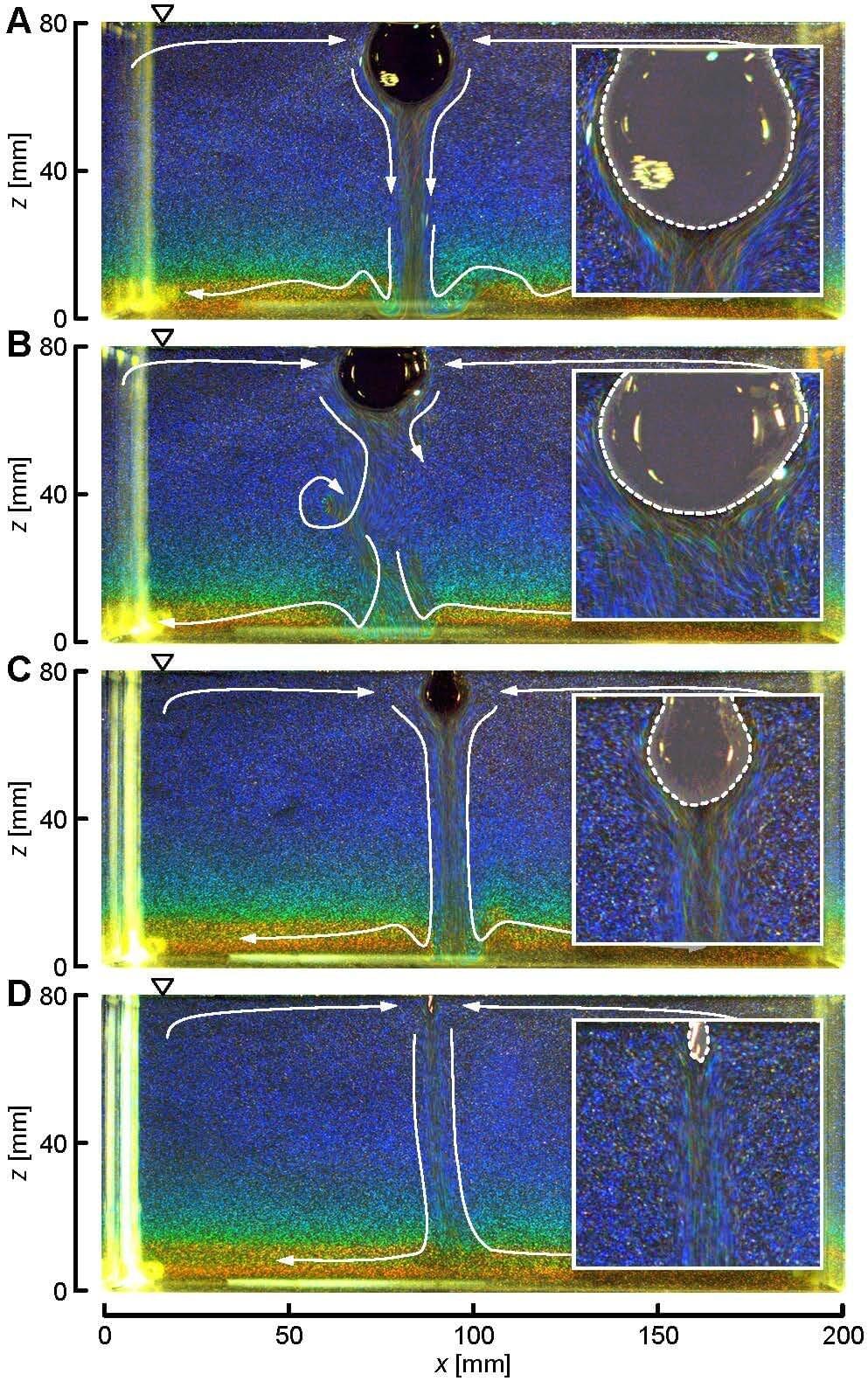
A pair of US researchers have developed a new model to tackle a deceptively simple problem: how a small block of ice melts while floating in calm water. Using an advanced experimental setup, Daisuke Noto and Hugo Ulloa at the University of Pennsylvania have captured the intricate dynamics that underlie this everyday process—work that could ultimately pave the way for more accurate predictions of melting sea ice. The study has been published in Science Advances.
If you place a block of ice in a glass of water, it will float at the surface and gradually melt. While this scenario seems simple at first glance, the dynamics involved are surprisingly complex: even if the surrounding water is completely still, the flow of heat from the warmer liquid into the colder ice generates motion that disrupts the system.
As the ice melts, it can begin drifting, spinning, or even flipping over. In turn, these motions alter the surrounding flow of water and heat, affecting the overall melting rate and making it remarkably difficult for physicists to predict how long the ice will last.