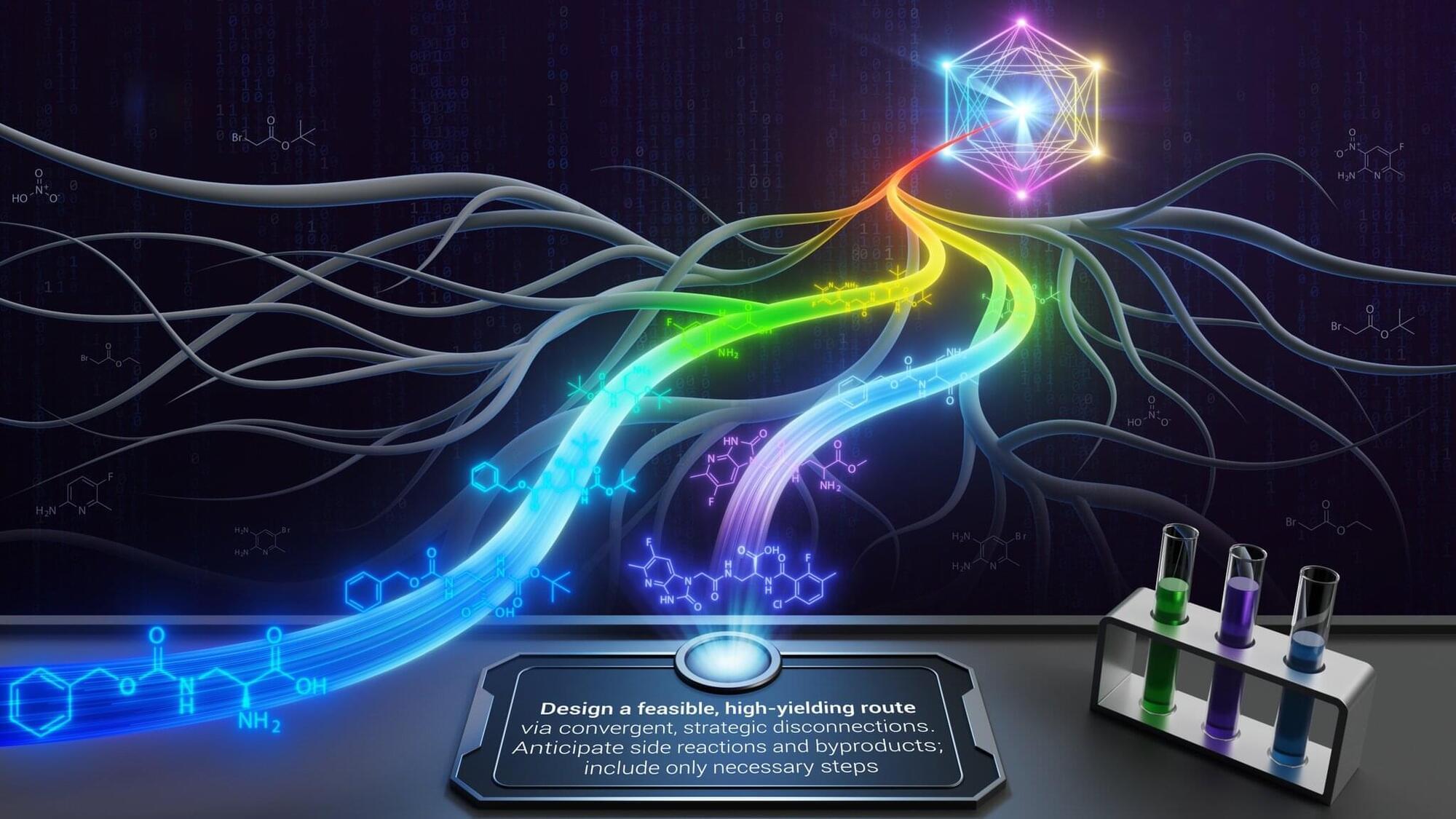
Designing molecules is one of chemistry’s most complex challenges. From life-saving drugs to advanced materials, each compound requires a precise sequence of reactions. Planning these steps demands both technical knowledge and strategic insight, making it a task that often relies on years of experience.
Two problems plague much of modern chemistry. The first is retrosynthesis: Chemists start from a target molecule and work backward to identify simpler building blocks and viable reaction pathways. Retrosynthesis involves countless decisions, from choosing starting materials to determining when to form rings or protect sensitive functional groups. While computers can explore vast “chemical spaces,” they often struggle to capture the strategic reasoning used by human experts.
The second problem is reaction mechanisms. These describe how chemical reactions unfold step by step through the movements of electrons. Mechanistic insight helps scientists predict new reactions, improve efficiency, and reduce costly trial and error. Existing computational methods can generate many possible pathways, but often lack the chemical intuition needed to identify the most plausible ones.