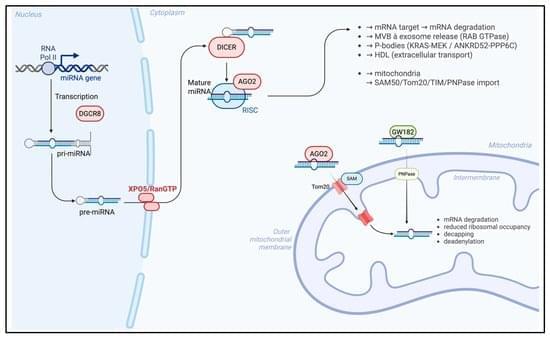
💡 by Catanesi, M., et al. (2026). Biomedicines, 14, 313. 📖Read the full text: https://brnw.ch/21x1AQl.
Neurodegenerative diseases continue to challenge modern medicine, with mitochondrial dysfunction emerging as one of their most critical hallmarks. Among the most intriguing recent discoveries is the role of mitochondrial‑localized microRNAs (mito‑miRNAs), small regulatory molecules capable of influencing mitochondrial gene expression and cellular metabolism. As research uncovers their presence and function within the mitochondrial environment, these molecules are gaining attention for their potential involvement in the onset and progression of disorders such as Parkinson’s disease. Understanding how mito‑miRNAs contribute to neuronal vulnerability may open new avenues for diagnostics and therapeutic strategies in neurodegeneration.
Neurodegenerative diseases (NDs) are the most prevalent age-associated disorders, characterized by progressive neuronal loss and cognitive decline. Mitochondrial dysfunction is strictly associated with NDs and represent one of the hallmarks of these disorders, with neurological syndromes frequently representing the primary clinical manifestations of mitochondrial abnormalities. As central regulators of cellular bioenergetics, mitochondria play a pivotal role in both the physiological maintenance and pathogenesis of disease by different regulatory approaches. One of these, microRNAs (miRNAs), a class of small non-coding RNAs, are well-established regulators of gene expression across different biological pathways.