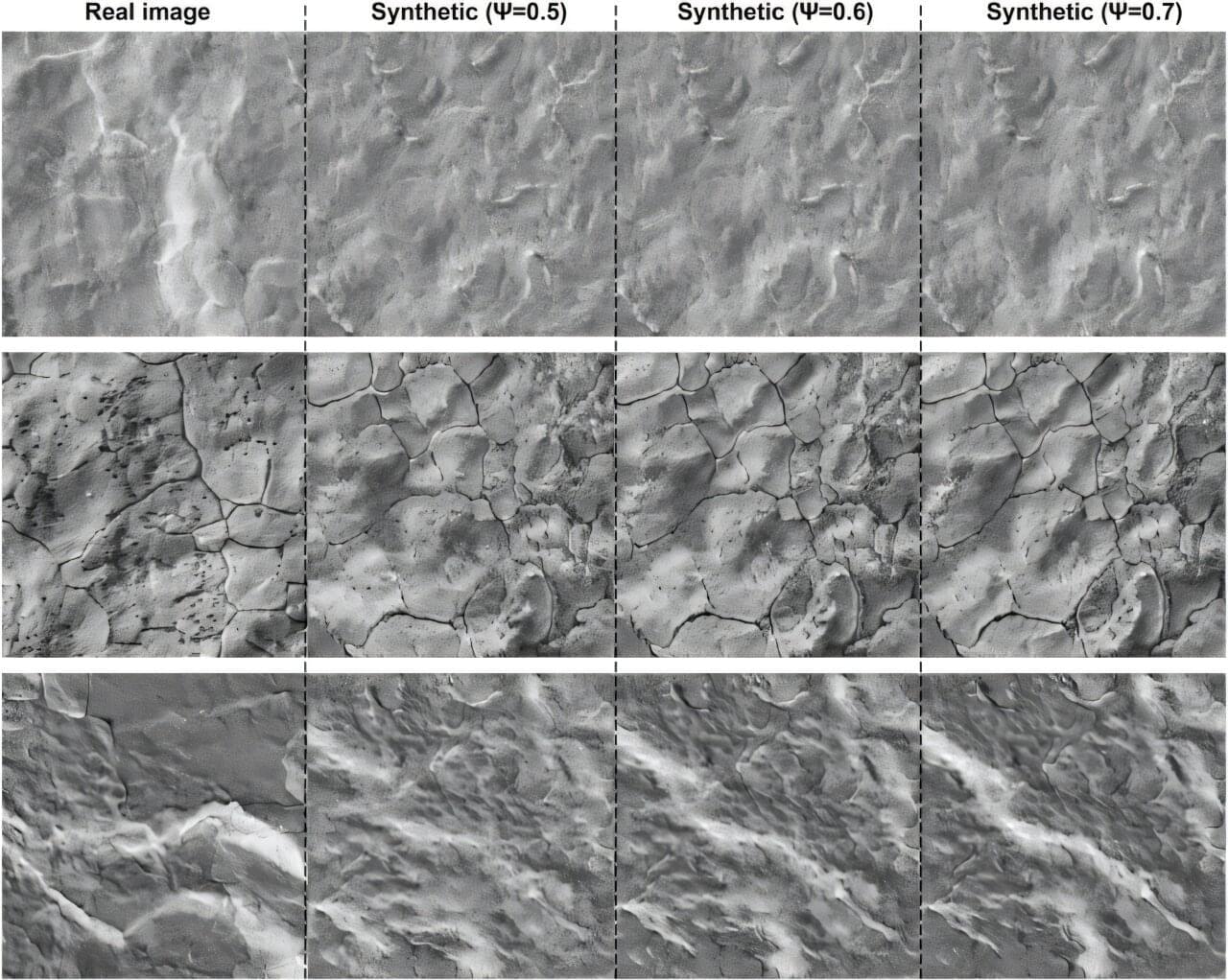
Tungsten’s superior performance in extreme environments makes it a leading candidate for plasma-facing components (PFCs) in fusion reactors, but the ultra-high heat can damage its microscopic structure and lead to component failure. Scanning electron microscopy (SEM) can capture and quantify these microstructure changes, but assembling a sufficiently large dataset of SEM imagery is expensive and logistically challenging.
To augment this dataset, researchers at Oak Ridge National Laboratory trained a generative machine learning model using 3,200 SEM images of tungsten samples exposed to fusion-relevant conditions. The model can generate novel SEM images with realistic microstructures and surface features, such as cracks and pores, without replicating the original images.
“This work is not about making pretty pictures, it’s about capturing the statistics of real damage on these materials,” said ORNL’s Rinkle Juneja, the project’s principal investigator. “We train our generative workflow to learn tungsten’s microstructure signatures, like crack patterns, so it can generate new, statistically consistent microstructures, laying the groundwork for robust, data-driven assessment of PFC fusion materials.”