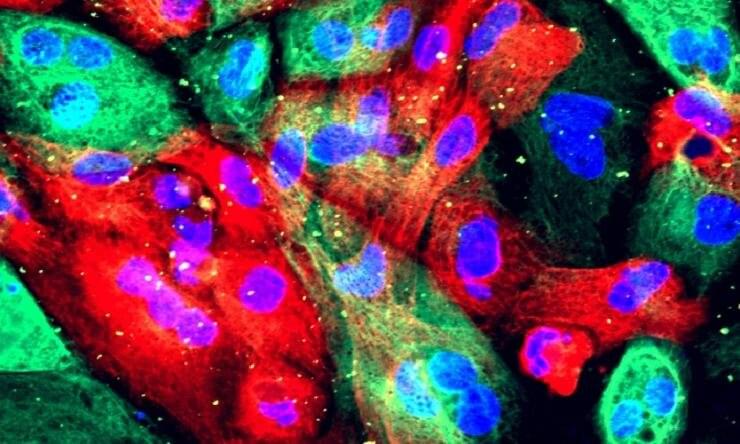
Northwestern Medicine scientists have discovered that a specific long non-coding RNA activates oncogenic signaling pathways in prostate cancer cells and drives tumor progression, underscoring its potential as a therapeutic target, according to a recent study published in Nature Communications. Rendong Yang, Ph.D., associate professor of Urology and a member of the Robert H. Lurie Comprehensive Cancer Center of Northwestern University, was co-corresponding author of the study.
Long non-coding RNAs (lncRNAs) are a type of RNA with transcripts that contain more than 200 nucleotides and play a central role in regulating gene expression, most notably in cancer progression. While previous work has identified many cancer-associated lncRNAs, the mechanisms by which lncRNAs influence cancer progression have remained unknown due to lncRNAs’ cell type-specific and tissue-specific gene expression patterns.
In the current study, the scientists aimed to uncover cellular interactions between super-enhancers—clusters of regulatory DNA elements that drive high levels of transcription—and lncRNAs by studying RNA sequencing data from patients with metastatic castration-resistant prostate cancer.