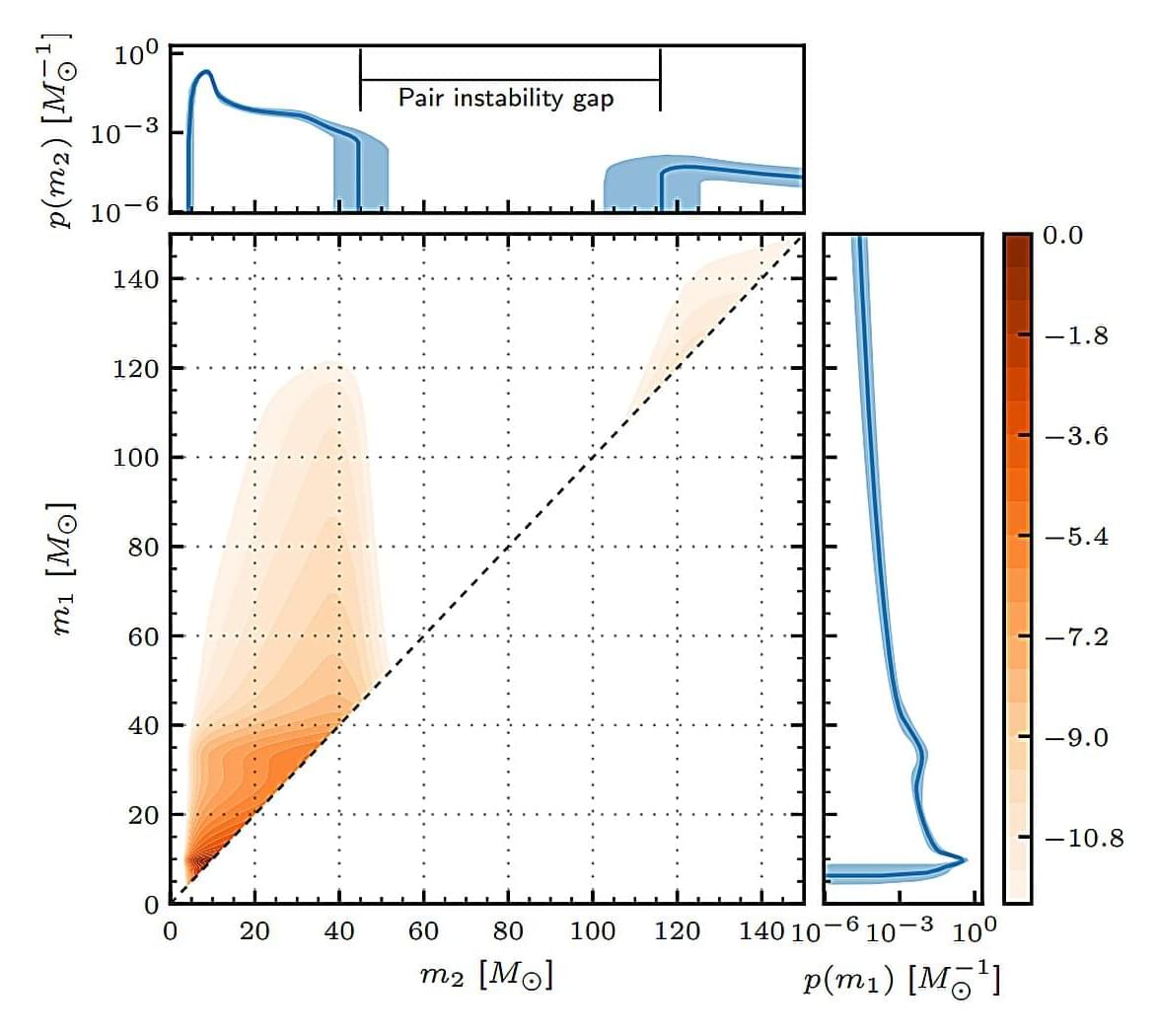
An international team led by Monash University has uncovered evidence of a rare form of exploding star, helping to shed light on one of the most cataclysmic events in the universe. At the end of their lives, most massive stars collapse into black holes—objects with gravity so strong that not even light can escape.
Some very massive stars, however, are expected to become so hot that they are blown apart in a pair-instability supernova—an explosion so intense that the star is completely disrupted, leaving behind no black hole.
First predicted in the 1960s, pair-instability supernovae are challenging to distinguish from more common stellar explosions that leave behind black holes.