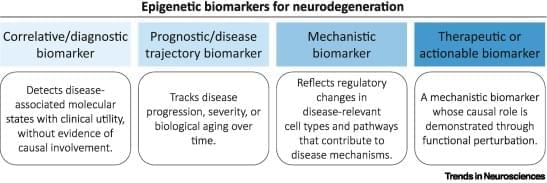
Epigenetic molecular signatures as biomarkers in neurodegenerative diseases.
Integration of multiomic data is driving the development of cell-type-resolved reference atlases and molecular signatures of neurodegeneration.
Next-generation epigenetic editors are enabling causal interrogation of disease associated marks, revealing disease driving and potentially modifiable epigenetic mechanisms.
Altered chromatin architecture and global epigenomic dysregulation are emerging hallmarks of neurodegenerative diseases, detectable not only in the brain but also in peripheral biofluids.
Peripheral chromatin accessibility and conformation signatures are emerging as clinically actionable biomarkers for early diagnosis, prognosis, and stratification.
Circulating DNA (hydroxy-)methylation profiles offer new avenues for noninvasive biomarker discovery for neurodegenerative diseases, but low yield and sensitivity in detecting neuronal signals remain key challenges. sciencenewshighlights ScienceMission https://sciencemission.com/Epigenetic-biomarkers-in-ND
Collectively, neurodegenerative diseases impose an escalating global health burden, representing one of the leading causes of death and disability worldwide. Despite their growing prevalence, diagnosis and treatment remain major challenges, partly due to the absence of specific and reliable biomarkers for early detection, disease monitoring, and prognosis. Epigenetic biomarkers are emerging as promising clinical tools, although their potential in the context of neurodegenerative diseases is not yet fully realised. In this review, we provide an overview of advances in the understanding of DNA modifications and chromatin architecture in neurodegeneration, highlighting translational relevance for biomarker discovery and therapeutic development.