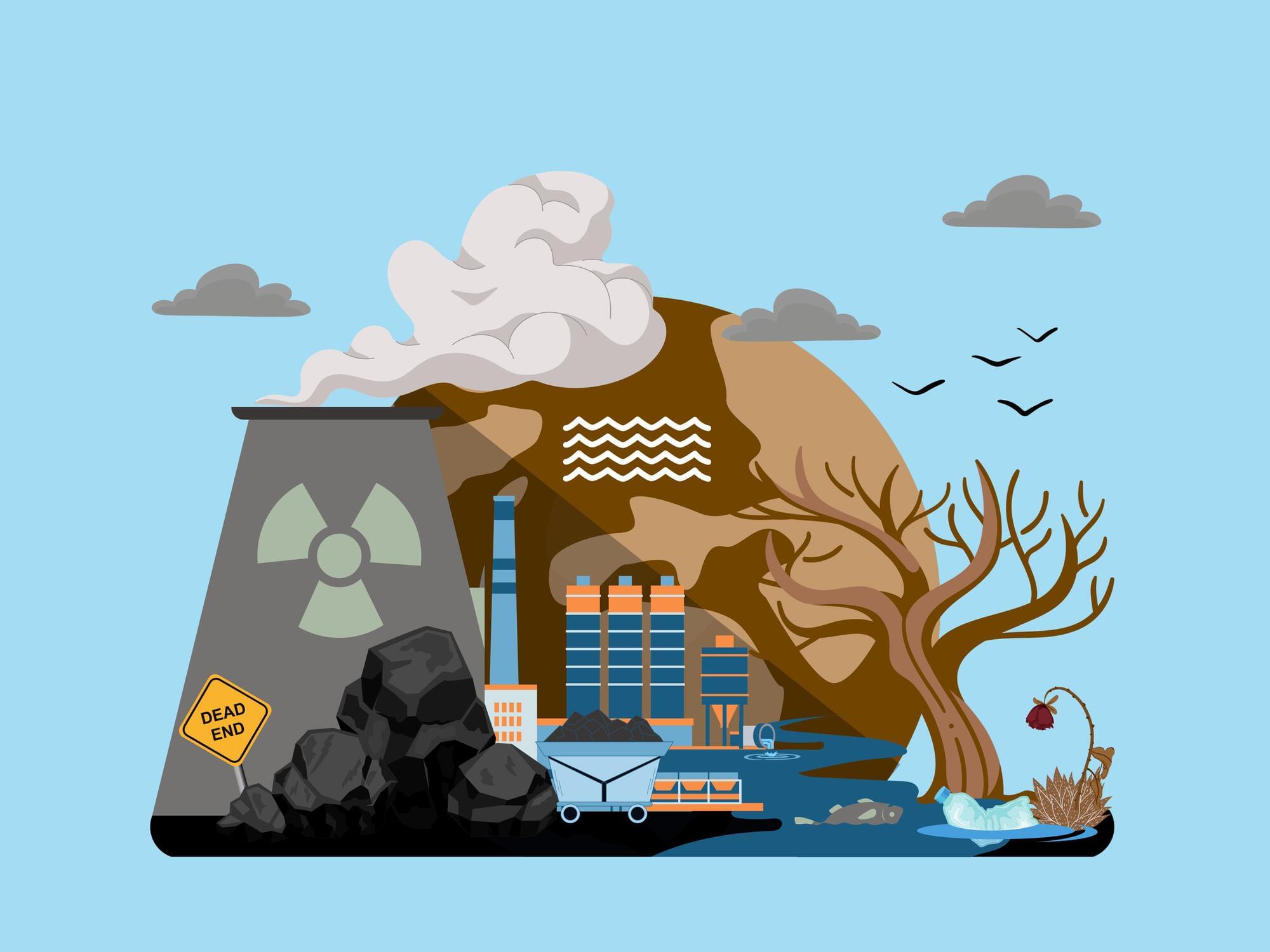
Atmospheric desert dust absorbs roughly twice the heat previously estimated by climate models, representing about 10% of total global warming. [ https://www.labroots.com/trending/earth-and-the-environment/…estimate-2](https://www.labroots.com/trending/earth-and-the-environment/…estimate-2)
What role does dust play in climate change? This is what a recent study published in Nature Communications hopes to address as a team of scientists investigated how desert dust could be used to constrain climate models. This study has the potential to help researchers, climate scientists, legislators, and the public better understand new methods for understanding the various environmental factors that contribute to climate change.
For the study, the researchers used a combination of observational data and computer models with the goal of filling a knowledge gap regarding how desert dust influences solar radiation distribution within Earth’s atmosphere. The observational data was obtained from satellites and aircraft measurements while the climate models obtained new data for computing the results. In the end, the researchers found that while dust cools the planet, it is also prone to trap double the heat as climate models have estimated, or 10 percent of the total heat retention for the planet.
“Atmospheric dust traps about a quarter of a watt per square meter of heat by absorbing and scattering the heat radiation emitted by the Earth, comparable to roughly one-tenth of the warming effect produced by the carbon dioxide emitted from all human activities,” said Dr. Jasper Kok, who is a professor in atmospheric and ocean sciences at UCLA and lead author of the study. “Current climate models undercount the heating effect of dust by about half. The climate models remain effective and useful, and this will make them even more precise.”