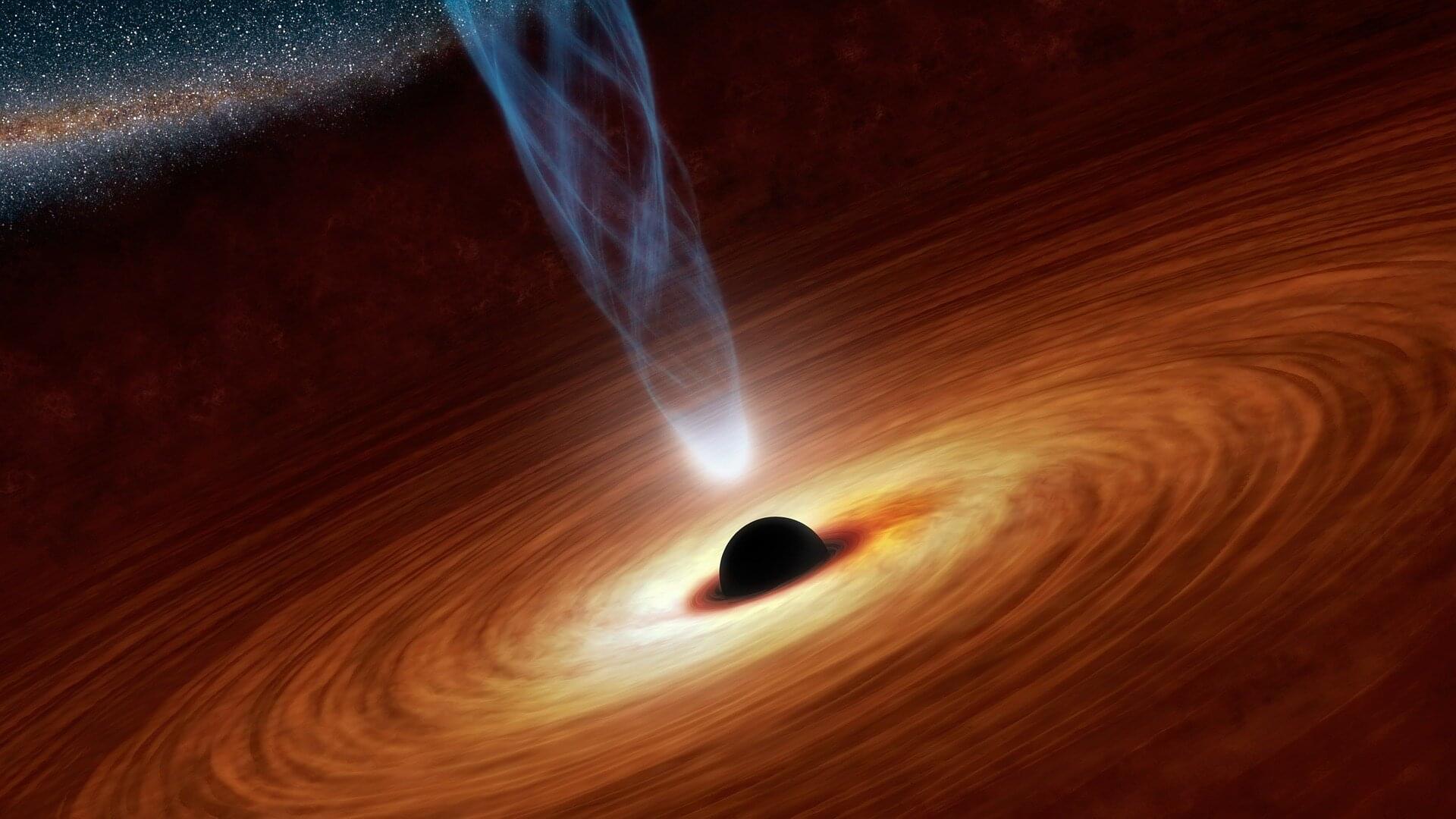
A growing mystery in astronomy is the presence of gargantuan black holes—some weighing as much as a billion suns—existing less than a billion years after the Big Bang. According to the standard theory of black hole formation, these black holes simply should not have had enough time to grow so large. A study led by University of California, Riverside graduate student Yash Aggarwal shows that dark matter decays could be the key to understanding the origin of these cosmic behemoths. Published in the Journal of Cosmology and Astroparticle Physics, the research shows that the energy released from dark matter decay could alter the chemistry of early galaxies enough to cause some of them to directly collapse into black holes rather than forming stars.
The result is timely, since NASA’s James Webb Space Telescope continues to observe unusually large black holes in the early universe that could have formed by direct collapse. Astronomers had believed this process requires a coincidence of nearby stars shining onto pre-stellar gas and so expected it to be rare.
Aggarwal’s team goes beyond the standard approach by using dark matter—the unknown 85% of the matter in the universe that helps form galaxies. They show that if dark matter decays, it can leak a small amount of its energy into the gas and supercharge the direct collapse rate. Each decaying dark matter particle would only need to inject an amount of energy that is a billion trillionths of the energy of a single AA battery.