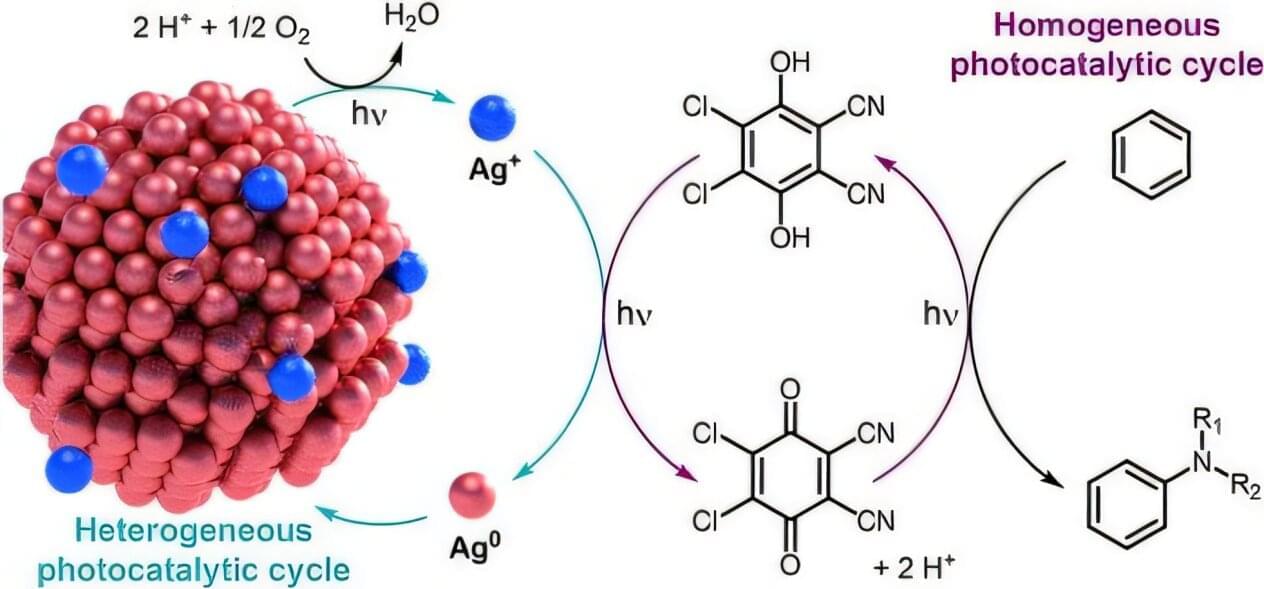
In chemical processes for producing pharmaceuticals, catalysts are a core technology that determines production speed and cost. However, until now, there has been a trade-off between “precise but disposable catalysts” and “reusable catalysts.” A KAIST research team has developed an eco-friendly catalytic technology that combines these two types, operating solely with light and air. This opens a pathway to producing pharmaceutical ingredients more cheaply and cleanly, with expected reductions in carbon emissions and environmental pollution. The study is published in the Journal of the American Chemical Society.
A research team led by Professor Sang Woo Han of the Department of Chemistry has succeeded in combining two different types of catalysts into one system. One is a silver (Ag)-based catalyst that operates in a solid state, and the other is an organic photocatalyst, DDQ (a substance that triggers chemical reactions upon absorbing light), which operates in solution.
By enabling these two catalysts to function together, the team made it possible to carry out previously difficult reactions more efficiently.