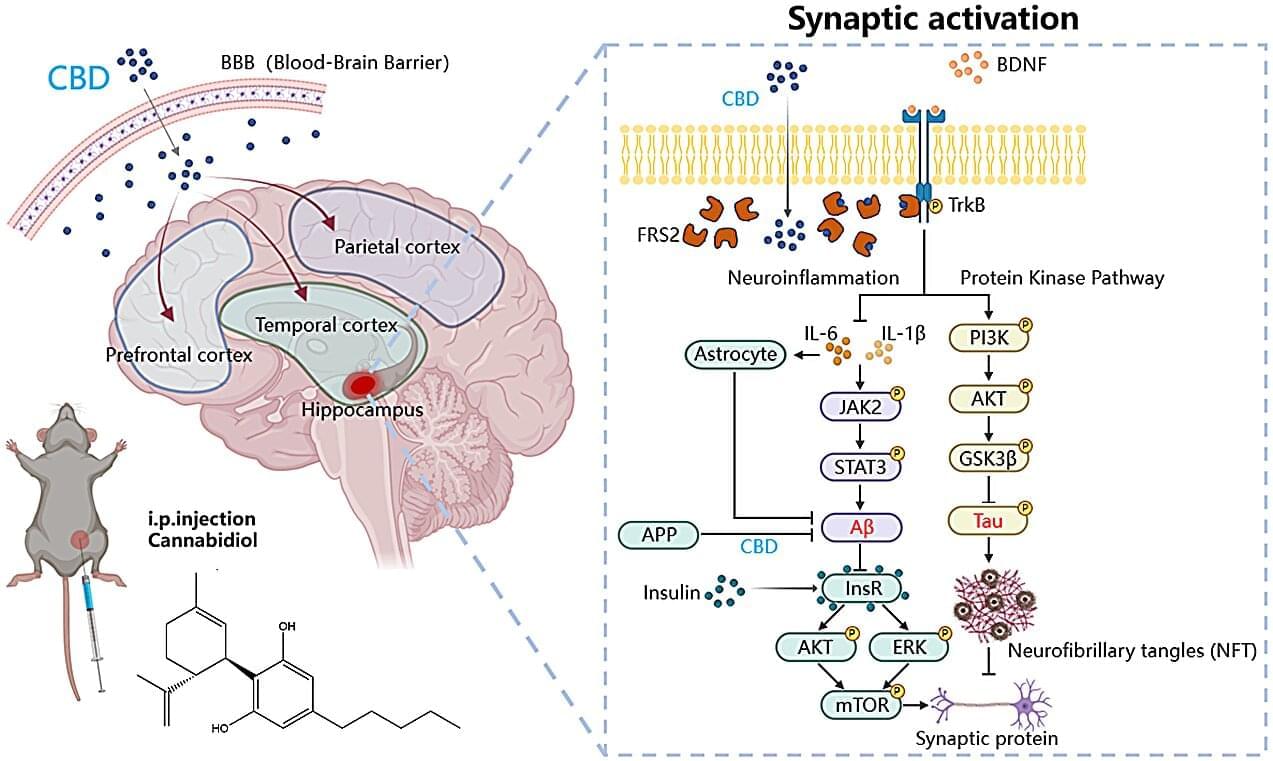
Alzheimer’s disease (AD) is a neurodegenerative disorder characterized by progressive memory loss, cognitive decline, and behavioral changes. The deficits linked to AD are known to result from the abnormal accumulation of proteins, particularly tau and β-amyloid (Aβ) in the brain and between nerve cells, which causes neuroinflammation and can prompt the degradation of brain cells.
The non-psychoactive compound derived from the Cannabis sativa plant, called cannabidiol (CBD), was recently found to show promise for protecting brain cells from damage.
Compared to Δ9-tetrahydrocannabinol (THC), the compound in cannabis that elicits feelings of euphoria and alters a user’s mental state, CBD is safer and could thus be easier to introduce in clinical settings.