Carbon nanotubes are one technology that many observers believe hasn’t quite lived up to the extreme hype that surrounded them when they first appeared on the scene in the late 1990s. At that time, much was made of their extraordinary electrical, thermal, and mechanical properties, with predictions that they would revolutionize materials science, electronics, and daily life. But could we be closer to realizing some of that promise?
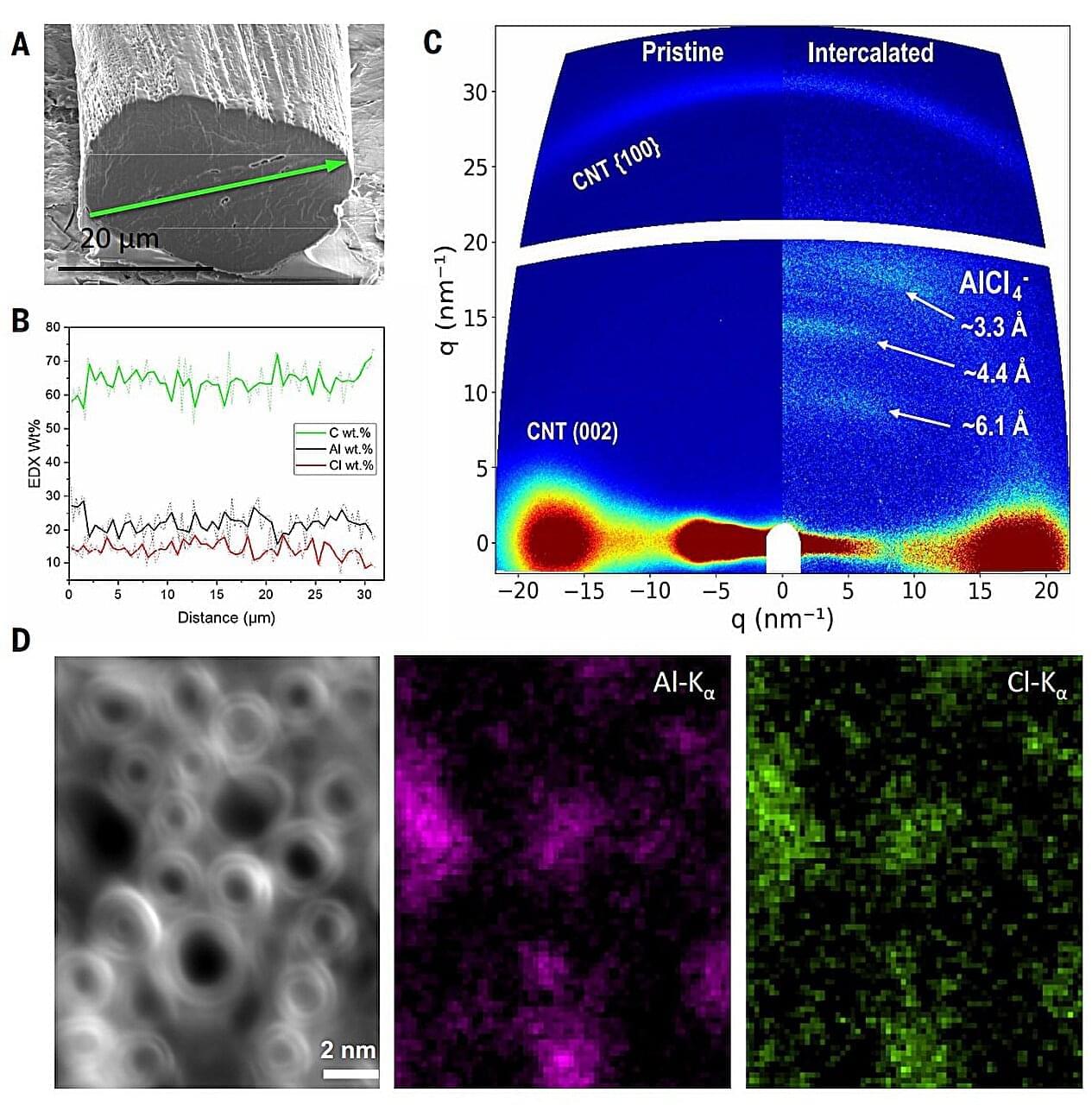
In a paper published in the journal Science, researchers describe a method for adding a chemical to carbon nanotube bundles that brings them closer to copper’s ability to conduct electricity.
Carbon nanotubes are nanoscale hollow cylinders of carbon atoms, a structure that allows electricity to flow through them with very low resistance. However, when you bundle millions of them together, as you would need for practical applications like power lines and electrical wiring, they lose some of their exceptional conductivity. Electrons move easily along individual nanotubes, but transferring charge between neighboring tubes in a bundle is much less efficient.