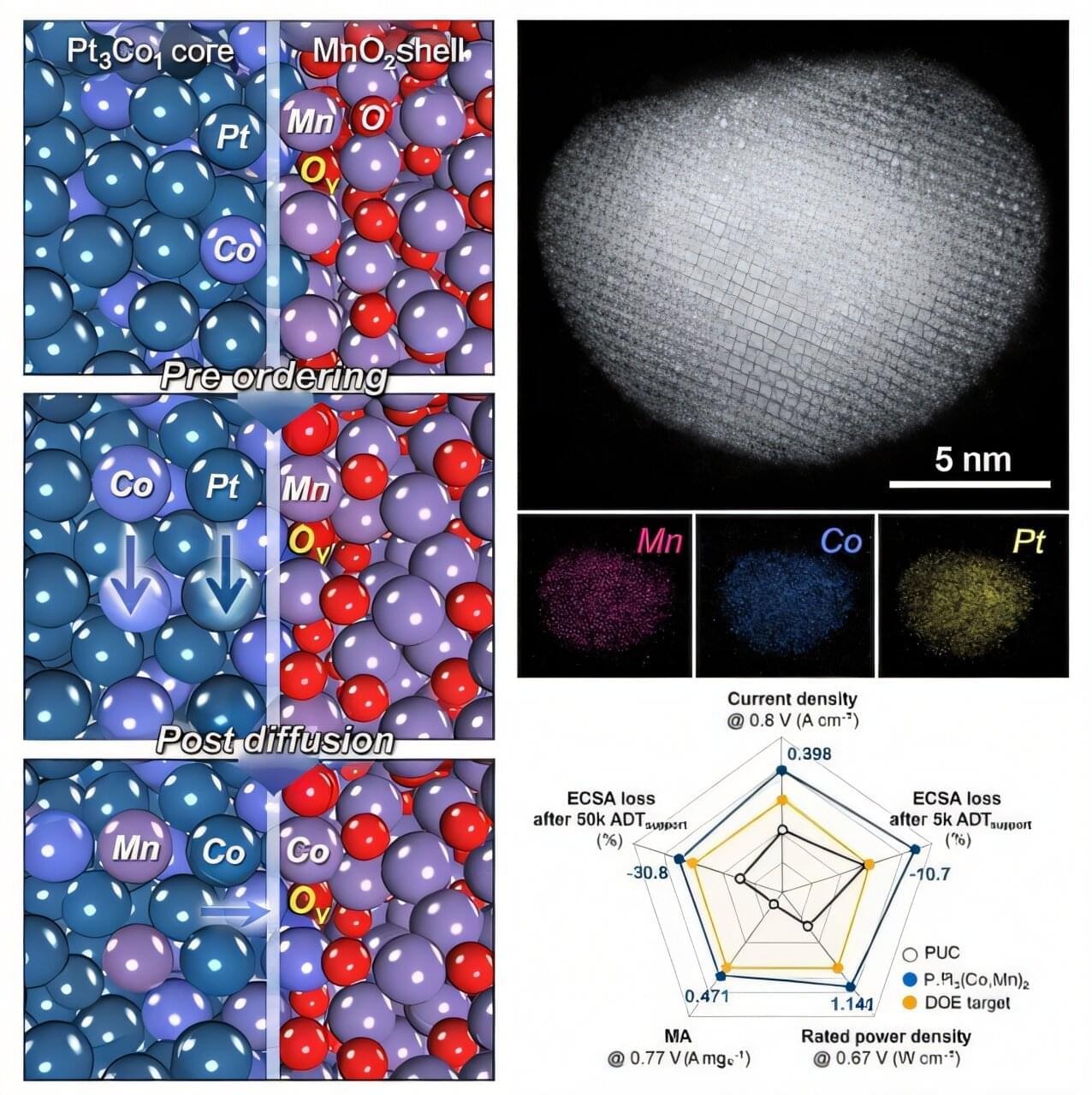
A research team has developed a next-generation platinum-based catalyst that improves both activity and durability in hydrogen fuel cells. The study is published in Advanced Materials. The team was led by Professor Sang Uck Lee of the School of Chemical Engineering at Sungkyunkwan University, with Ph.D. candidate Jun Ho Seok as a co-first author and Dr. Sung Chan Cho, in collaboration with Professor Kwangyeol Lee’s team at Korea University and Dr. Sung Jong Yoo’s team at the Korea Institute of Science and Technology (KIST).
Hydrogen fuel cells generate electricity through the electrochemical reaction of hydrogen and oxygen and are considered a promising clean energy technology. However, their broader commercialization has been hindered by the sluggish oxygen reduction reaction (ORR) at the cathode and by catalyst degradation during long-term operation.
Conventional platinum-based intermetallic catalysts are known for their structural stability, but their atomic composition and arrangement are difficult to tune precisely. This has limited efforts to optimize their electronic structure and has made it challenging to achieve both high catalytic activity and long-term durability under demanding operating conditions, such as those required for hydrogen-powered vehicles.