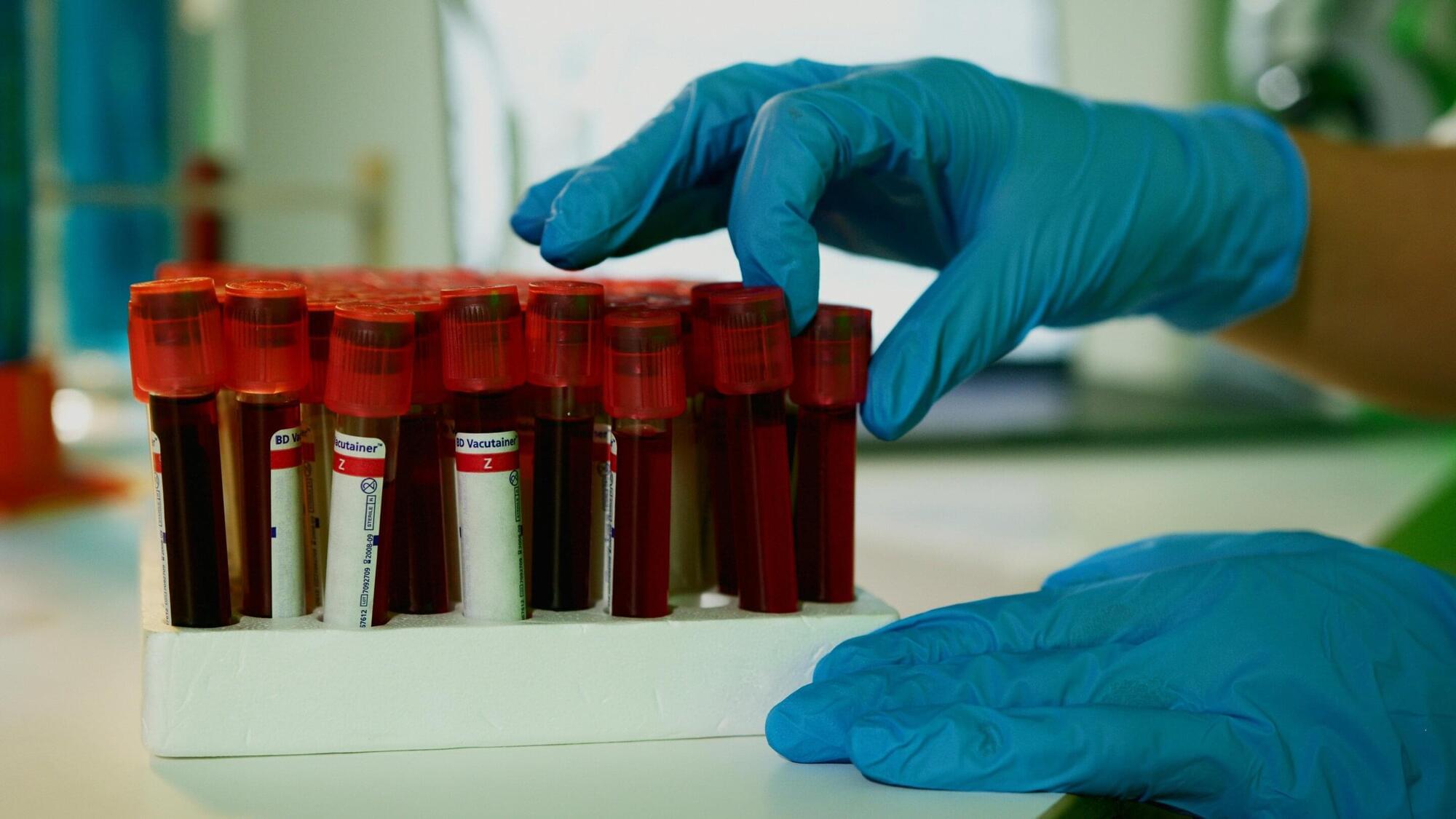
A study by investigators at Mass General Brigham has found that a blood test of plasma phosphorylated tau 217 (pTau217), an Alzheimer’s disease biomarker, can predict the progression of amyloid PET scan changes and cognitive decline in cognitively healthy older adults. The findings may help push back the clock to enable simpler, earlier disease prediction and indicate who may be at risk for cognitive decline. The results are published in Nature Communications.
“We used to think that PET scan detection was the earliest sign of Alzheimer’s disease progression, revealing amyloid accumulation in the brain 10 to 20 years before symptoms appear,” said lead author Hyun-Sik Yang, MD, a neurologist with Mass General Brigham Neuroscience Institute and an associate member of the Broad Institute of MIT and Harvard. “But now we are seeing that pTau217 can be detected years earlier, well before clear abnormalities appear on amyloid PET scans.”
Last year, the U.S. Food and Drug Administration cleared the first blood test for Alzheimer’s disease, paving the way for a cheaper, less invasive alternative to lumbar punctures and PET scans. The new study by Yang and colleagues adds important evidence about the predictive potential of these kinds of blood tests.