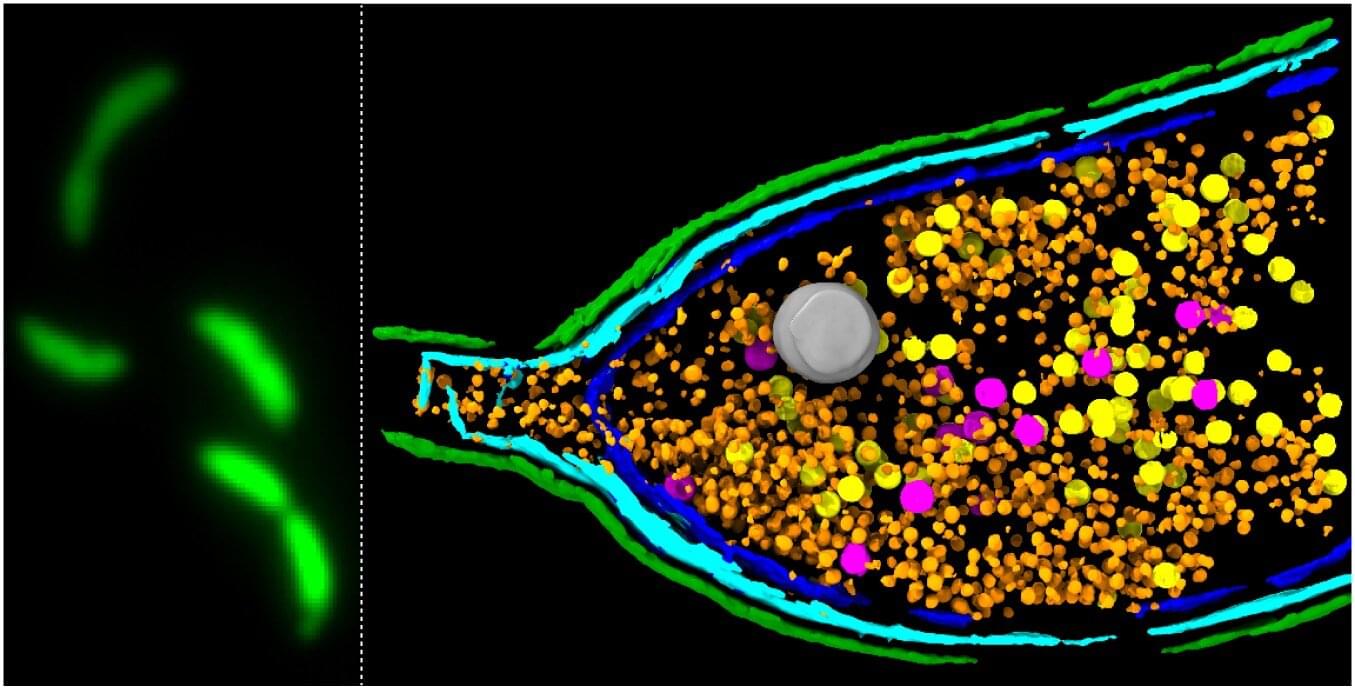
Research has shed important new light on the enemies-turned-allies that allow bacteria to exchange genes, including those linked to antimicrobial resistance (AMR). The insights, which expand our understanding of the major global health threat of AMR, came as John Innes Center researchers investigated the curious phenomena of gene transfer agents (GTAs).
These gene-carrying particles look like bacteriophages (viruses that infect bacteria), but they have been domesticated from ancient viruses and put to beneficial use under the control of the bacterial host cell.
Acting as couriers, they take up parcels of host bacterial DNA and deliver them to neighboring bacteria. This “selfless” sharing, known as horizontal gene transfer, can rapidly spread useful traits including genes that confer resistance to antibiotic drugs used to treat infections.