Detecting a single particle of light is hard; detecting a single microwave photon is even harder. Microwave photons, the tiny packets of electromagnetic radiation used in current technologies like Wi-Fi and radar, carry far less energy than visible light. They are about 100,000 times weaker than optical photons.
Many existing quantum technologies depend on detecting individual photons with high reliability. For visible light, this is well established using devices that convert incoming light directly into electrical signals. But at microwave frequencies (0.3–30 GHz), this fails because each individual photon doesn’t carry enough energy to release an electric charge into a material. This means that detecting single microwave photons requires a completely different strategy.
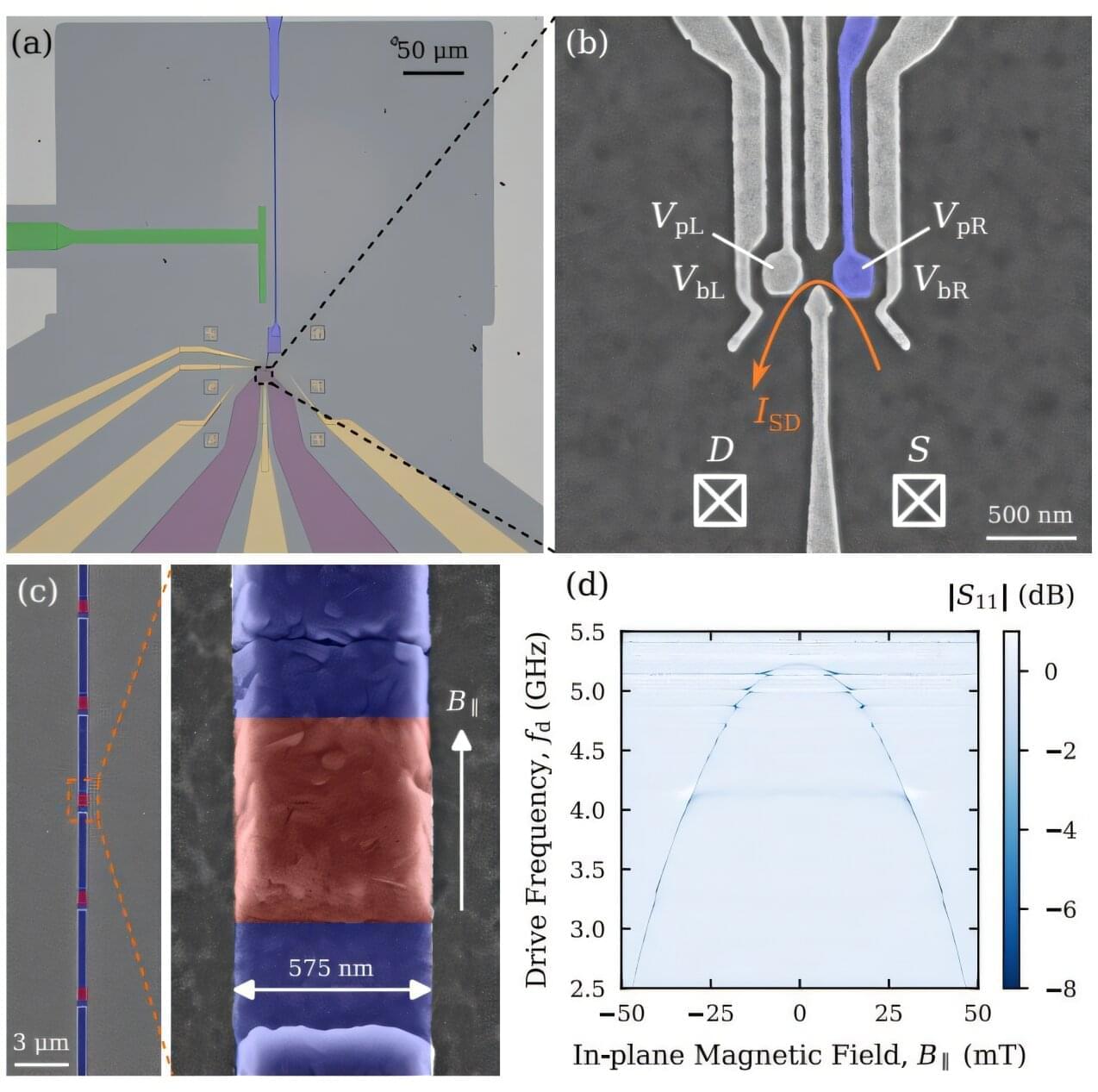
A long-standing goal has been to realize a simple device capable of continuously detecting microwave photons. Now, scientists at EPFL, led by Pasquale Scarlino, have developed a semiconductor-based detector that takes an important step in that direction.