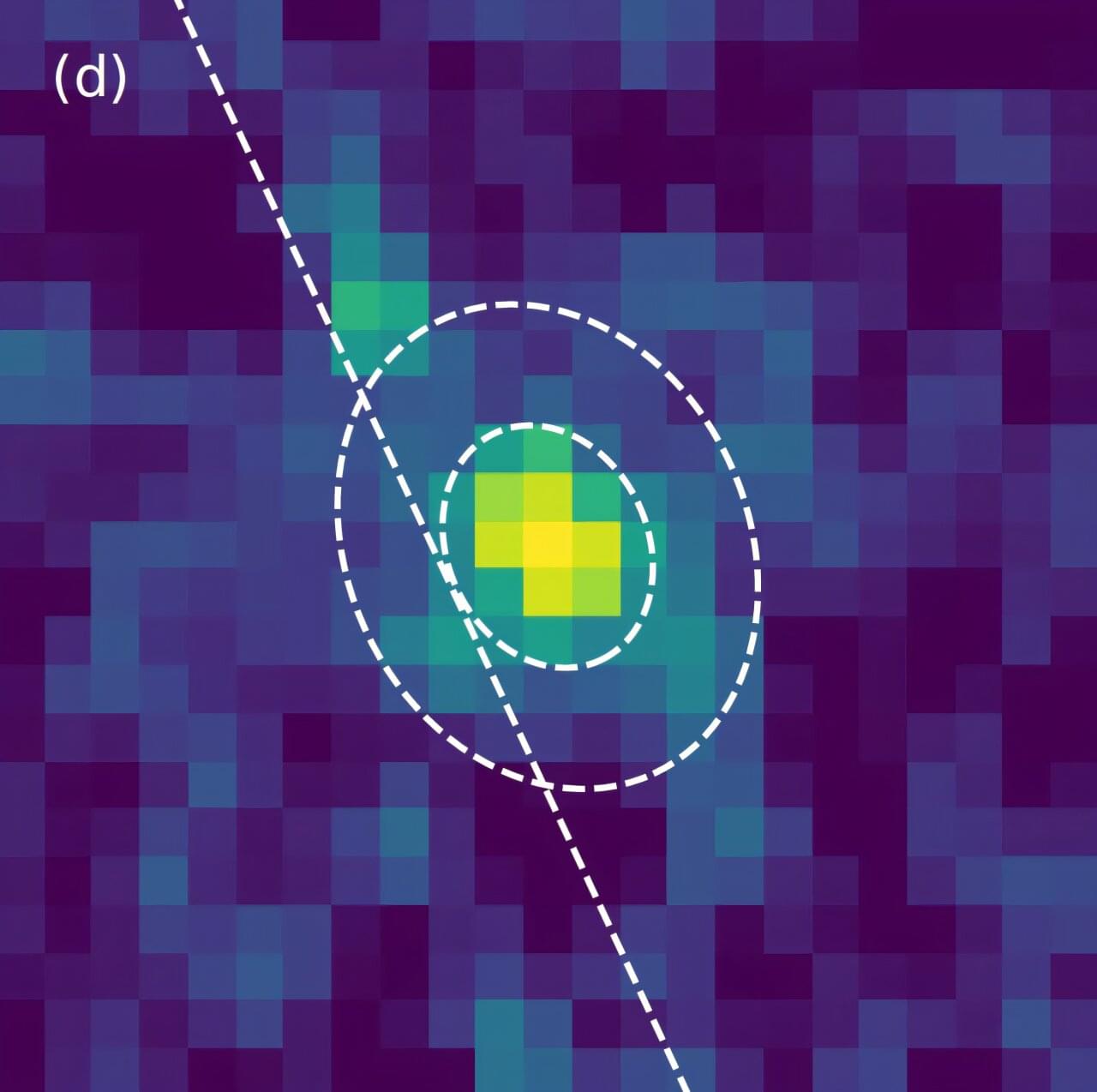
Using observations gathered by the James Webb Space Telescope (JWST), an international team of astronomers have revealed that one supermassive black hole in the early universe must have formed before a galaxy developed around it. Publishing their results in Monthly Notices of the Royal Astronomical Society, a team led by Roberto Maiolino at the University of Cambridge hope their results could lead to a better understanding of the origins of these immense objects.
Supermassive black holes (SMBH) are known to lurk at the centers of most galaxies, including our own Milky Way. Carrying up to billions of times the mass of the sun, they have presented a long-standing conundrum to astronomers.
According to our latest models, black holes form from the remnants of supernova explosions, which most often occur when massive stars reach the ends of their lives. Afterwards, they can grow by consuming gas from surrounding accretion disks—but their growth rate is restricted by a brightness threshold called the “Eddington limit.” Beyond this point, the outward pressure from radiation exceeds the gravitational pull, and material is ejected into space.