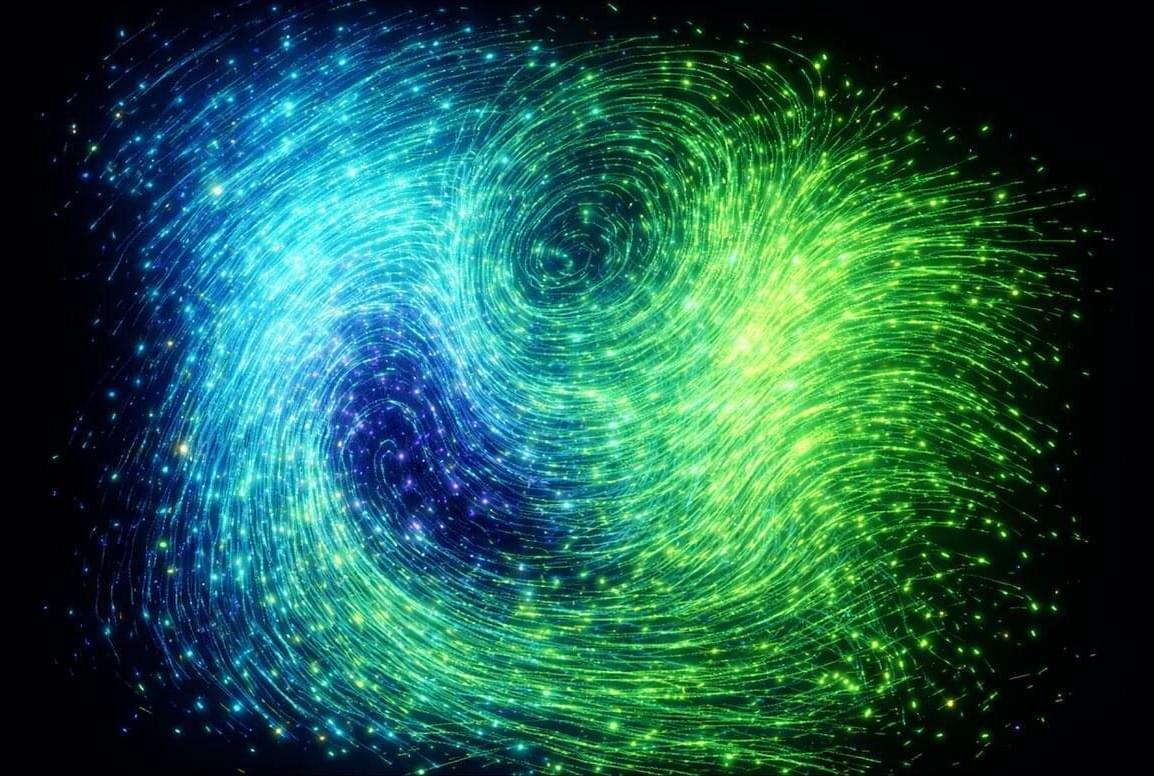
In a tank on the bottom floor of a University of Chicago research laboratory, scientists summon “The Blob” into existence by firing water jets to create an artfully choreographed series of rings.
First created three years ago in the laboratory of UChicago Prof. William Irvine, in collaboration with graduate student Takumi Matsuzawa, The Blob is one of the only ways that researchers can study the strange properties of turbulence —the chaotic swirling of fluids such as air and water—in its purest form: stationary in a lab and isolated from boundaries.
Turbulence is a bit of a paradox. It governs everything from the movements of ocean currents and hurricane clouds to the swirling of cream in your coffee and blood in your veins. But as widespread as it is, turbulence has been fiendishly difficult for scientists to understand, compared with most other everyday physics phenomena.