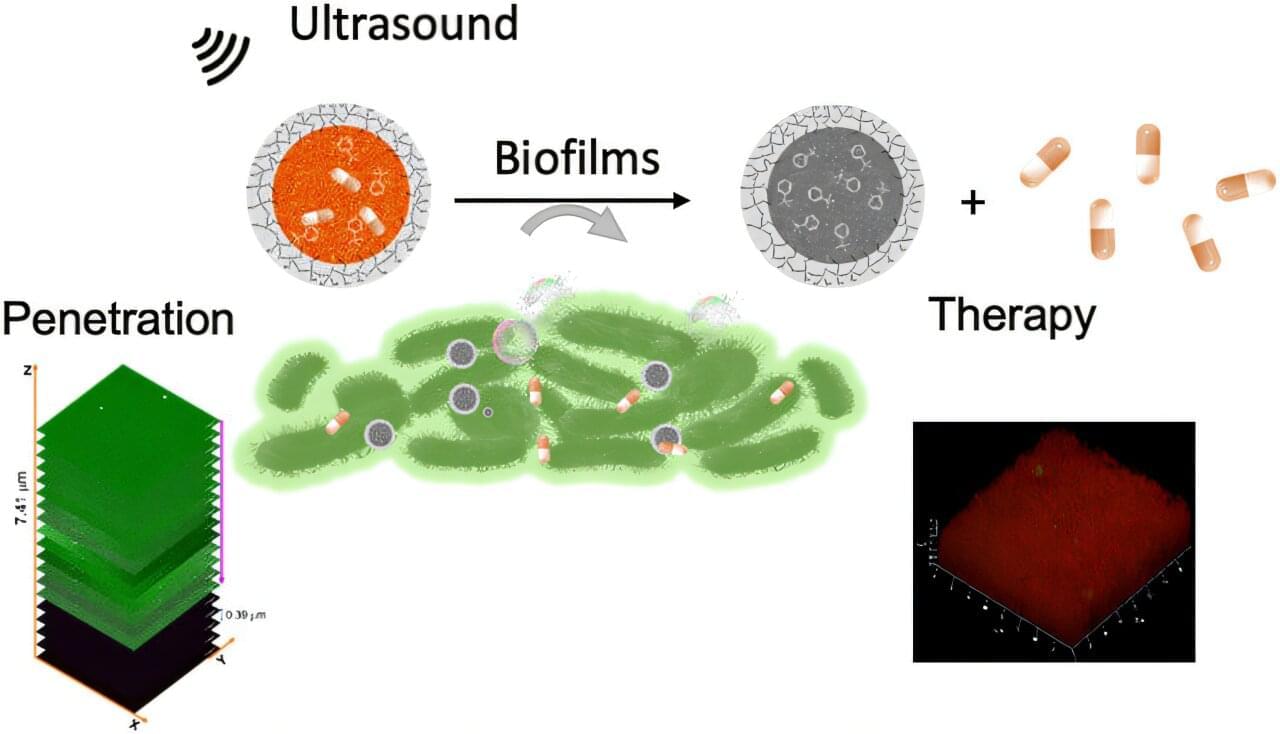
Scientists have designed nanoagents that act like smart drug-delivery capsules—carrying an antibiotic deep into bacterial infection sites and releasing it only when activated by gentle ultrasound. Delivering antibiotics locally, directly to the site of an infection, is important, because treating the whole body with high doses increases the chances of bacteria developing resistance. Nanoagents can carry drugs straight to the infected area providing localized therapy with minimal amount of drug, reducing the risks of antibiotic resistance.
Publishing their findings in JACS Au, researchers from the University of Birmingham and Nottingham Trent University reveal the results of designing the particles so they can hide an antibiotic, rifampicin, in their interior and testing their antibacterial activity when ultrasound is applied. An antimicrobial drug, rifampicin, is used to treat tuberculosis and Staphylococcus aureus infections, including those associated with medical implants.
Many bacterial infections form biofilms—sticky, protective layers that make them very hard to treat. Biofilms cause a lot of infections and resist many antibiotics because the drugs cannot easily penetrate their thick structure. Water repelling antibiotics like rifampicin are especially ineffective because they struggle to get deep inside these moist, gel-like biofilms.