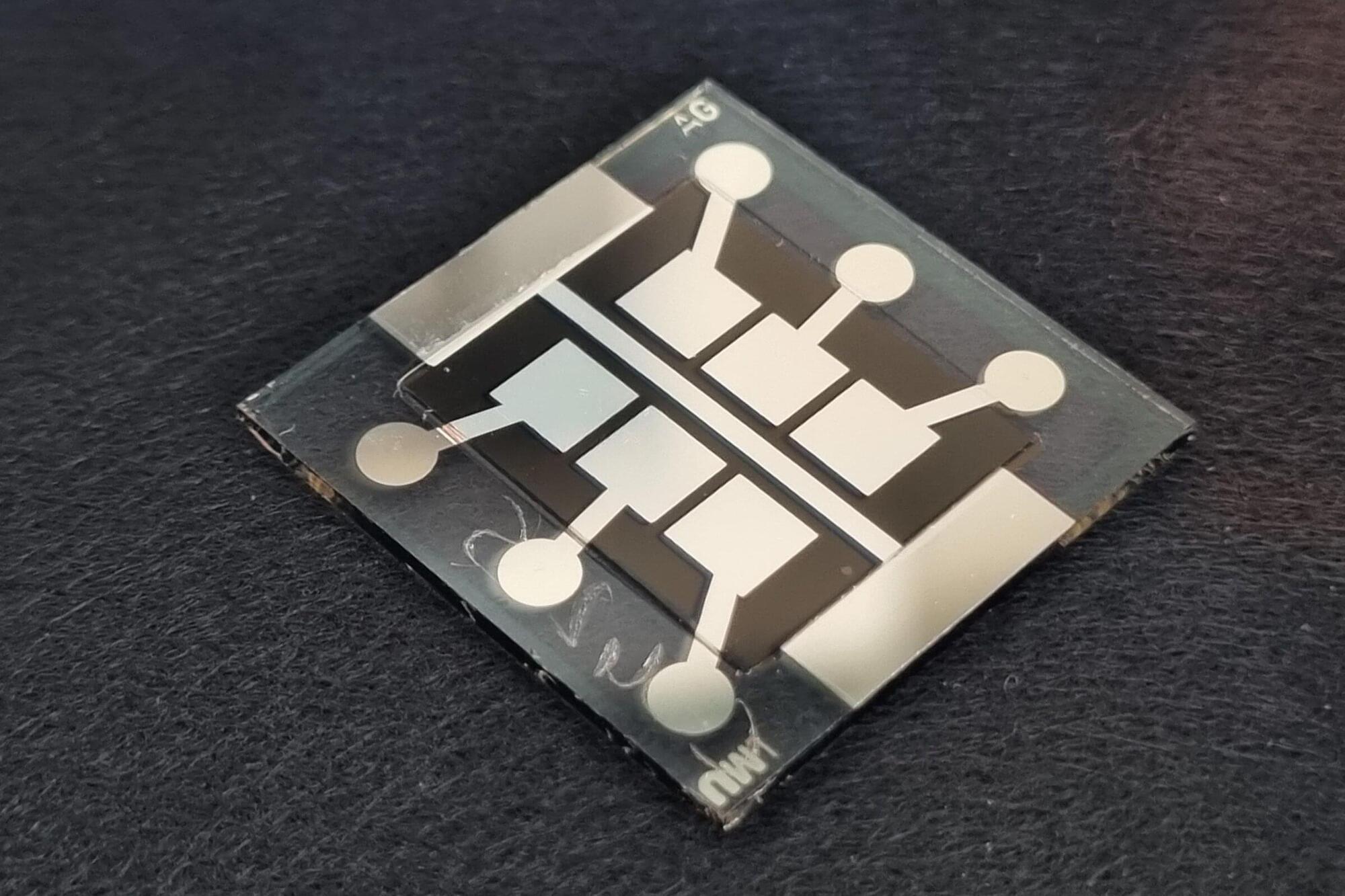
The Aydin Group at LMU Munich has unveiled a novel strategy for making perovskite solar cells more robust against extreme temperature fluctuations. To this end, the researchers led by Dr. Erkan Aydin, group leader at LMU’s Department of Chemistry and Pharmacy, combined two molecular approaches. Their goal was to stabilize both the grain structure within the perovskite material and the interfaces of the solar cells, with a particular focus on enhancing the interaction between the perovskite layer and the underlying substrate. This enables the solar cells to maintain stable performance under the extreme thermal cycling typical of Low Earth orbit (LEO), as well as in other harsh environmental conditions. Their results have been published in the journal Nature Communications.
Regarding the background: Perovskite solar cells are considered one of the most promising next-generation photovoltaic technologies. They are relatively inexpensive to manufacture and achieve high efficiencies.
However, their mechanical stability is an issue. In particular, when confronted with strong temperature fluctuations in LEO—for example, in the range between −80 and +80 degrees Celsius—materials inside the solar cell can expand and contract to varying extents. This creates mechanical stresses, which lead to cracks, delamination, or drops in performance.