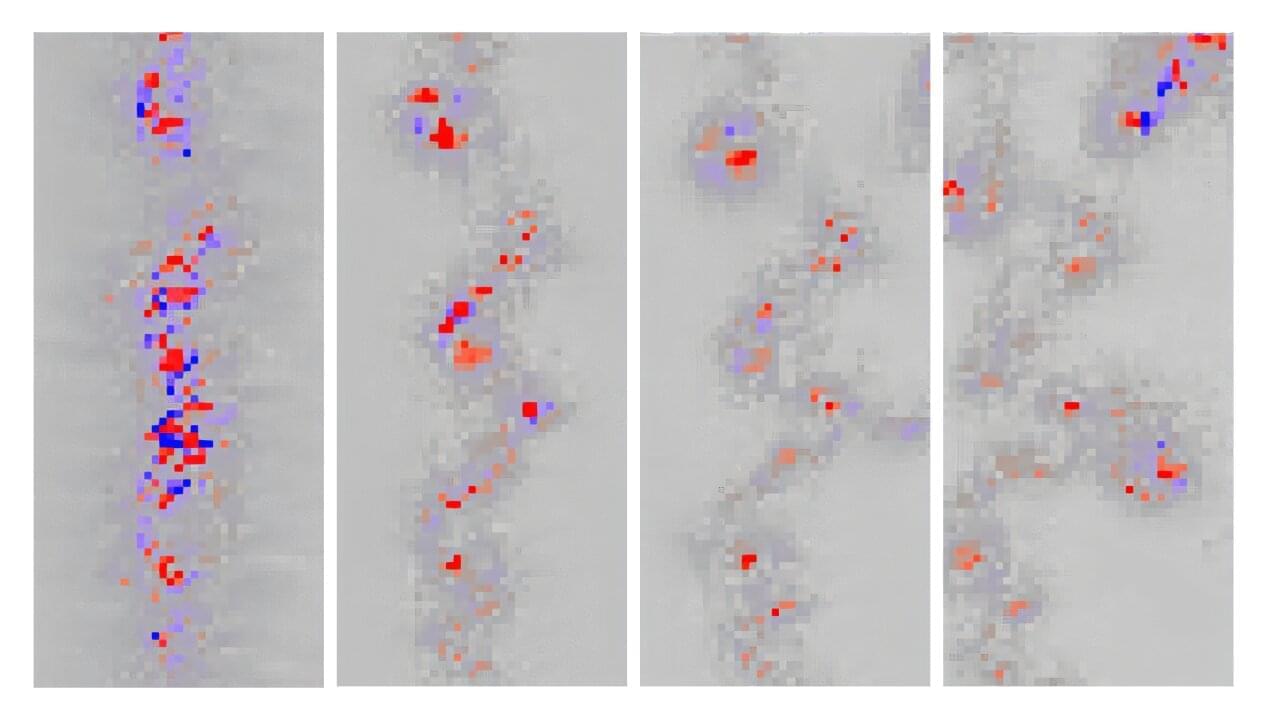
A new study revisits a century-old question about how turbulence starts. The findings could potentially influence not only aircraft engineering but even the design of mechanical heart valves, and treatment of heart disease. The study is published in Scientific Reports.
Computer simulations at Stockholm’s KTH Royal Institute of Technology indicate that very small vortices may create increasingly larger swirls of flow—the opposite of the traditional view of how energy is transferred in turbulence.
Often seen in nature, from whirlpools to the shape of galaxies, vortices are one of the main flow structures that drive turbulence. The dominant idea over the last 100 years is that large swirling motions in a fluid break apart into smaller and smaller swirls, passing energy down the chain until it finally disappears—a process known as the forward cascade.