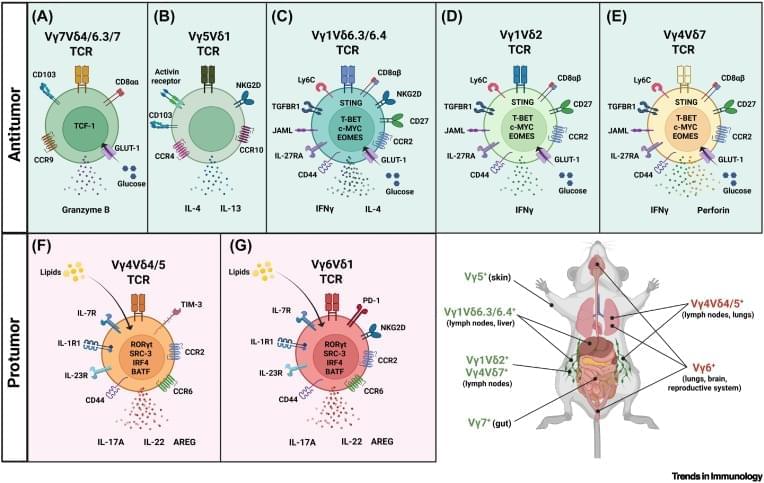
Mouse γδ T cells in cancer immunity.
Mouse γδ T cells are not all the same; rather, they comprise seven subsets that influence progression in several cancer types.
Antitumor γδ T cell subsets can be tissue-resident or circulating cells, which generally rely on glycolysis for energy production, and they mediate cancer cell death via interferon-gamma or orchestration of antitumor immunity.
Protumor γδ T cell subsets use lipids for energy production, and they promote primary tumor growth and metastasis through the production of interleukin17A to modulate the behavior of myeloid cells sciencenewshighlights ScienceMission https://sciencemission.com/Seven-subsets,-two-fates
The importance of γδ T cells in cancer, as defenders against tumorigenesis, was established more than 2 decades ago. Since that time, research using mouse models of cancer has brought to light a nonuniform view of tumor-associated γδ T cells by providing granularity into the role of individual γδ T cell subsets in specific cancer types. In this review, we discuss data that highlight the unique contributions of Vγ1+, Vγ4+, Vγ5+, Vγ6+, and Vγ7+ cells throughout cancer progression. We delve into their responses to tumors, including both protective and pathogenic functions. We examine how the mechanisms by which these mouse immune cell subsets shape tumor development and spread can be exploited for therapeutic purposes in people with cancer.