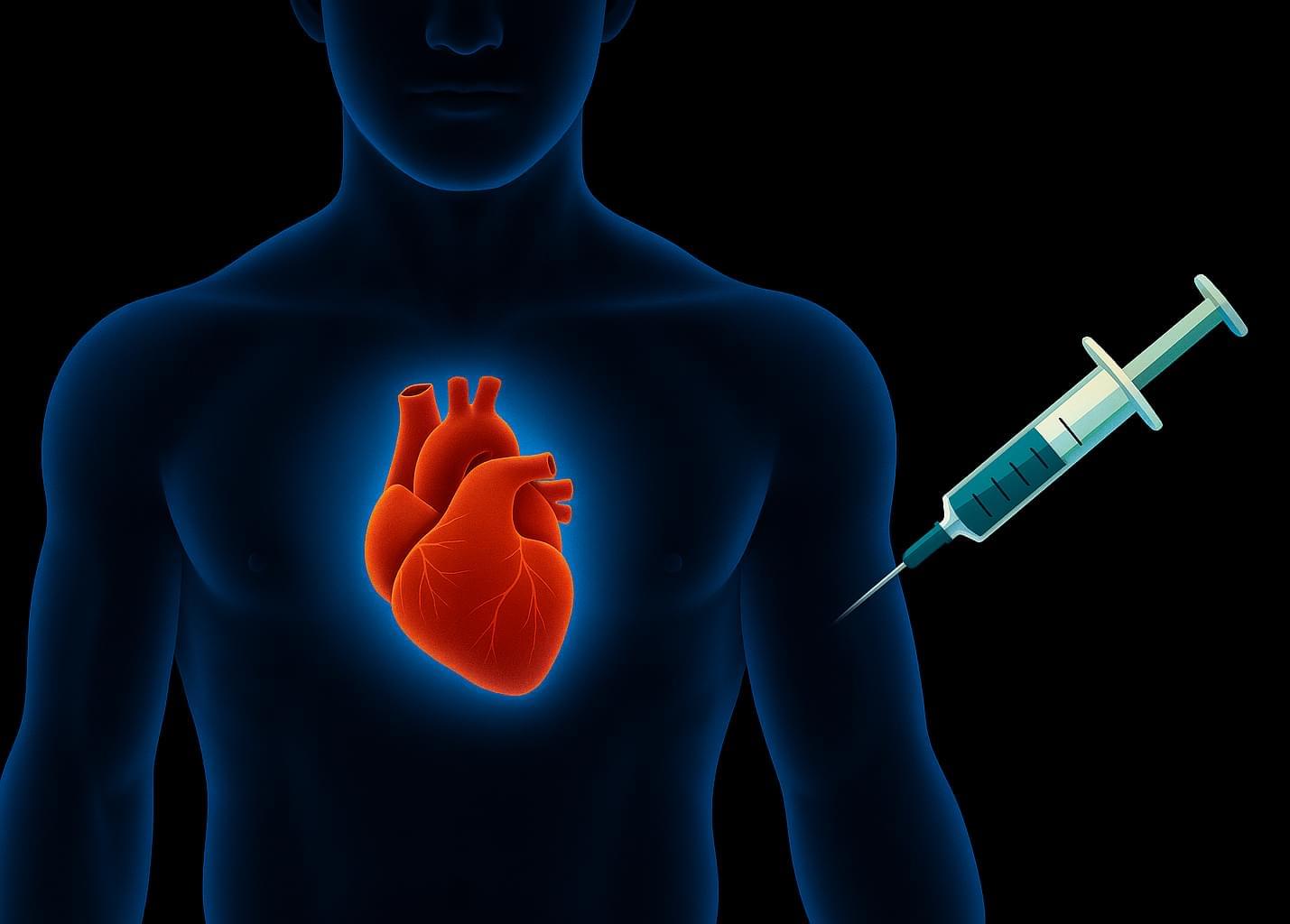
Researchers at Texas A&M University have developed a single-injection treatment to aid heart recovery after a heart attack. Following a myocardial infarction, the heart naturally releases atrial natriuretic peptide (ANP), a hormone that reduces cardiac stress and limits long-term damage — but in insufficient quantities. To address this, the team leveraged self-amplifying RNA (saRNA) technology: a one-time intramuscular injection (administered with a standard syringe into the arm) temporarily instructs muscle cells to produce elevated levels of ANP, which then enters the bloodstream and reaches the heart over several weeks. In animal models, the treatment reduced scarring, preserved healthy heart muscle, improved pumping function, and lowered the risk of post-infarction complications. Compared to the team’s earlier approaches — such as surgically implanted cardiac patches — this method is far simpler and more practical, with the potential to meaningfully improve both clinical workflow and patient outcomes.
The new approach uses an injection that prompts the body to release a natural heart protective hormone for weeks.