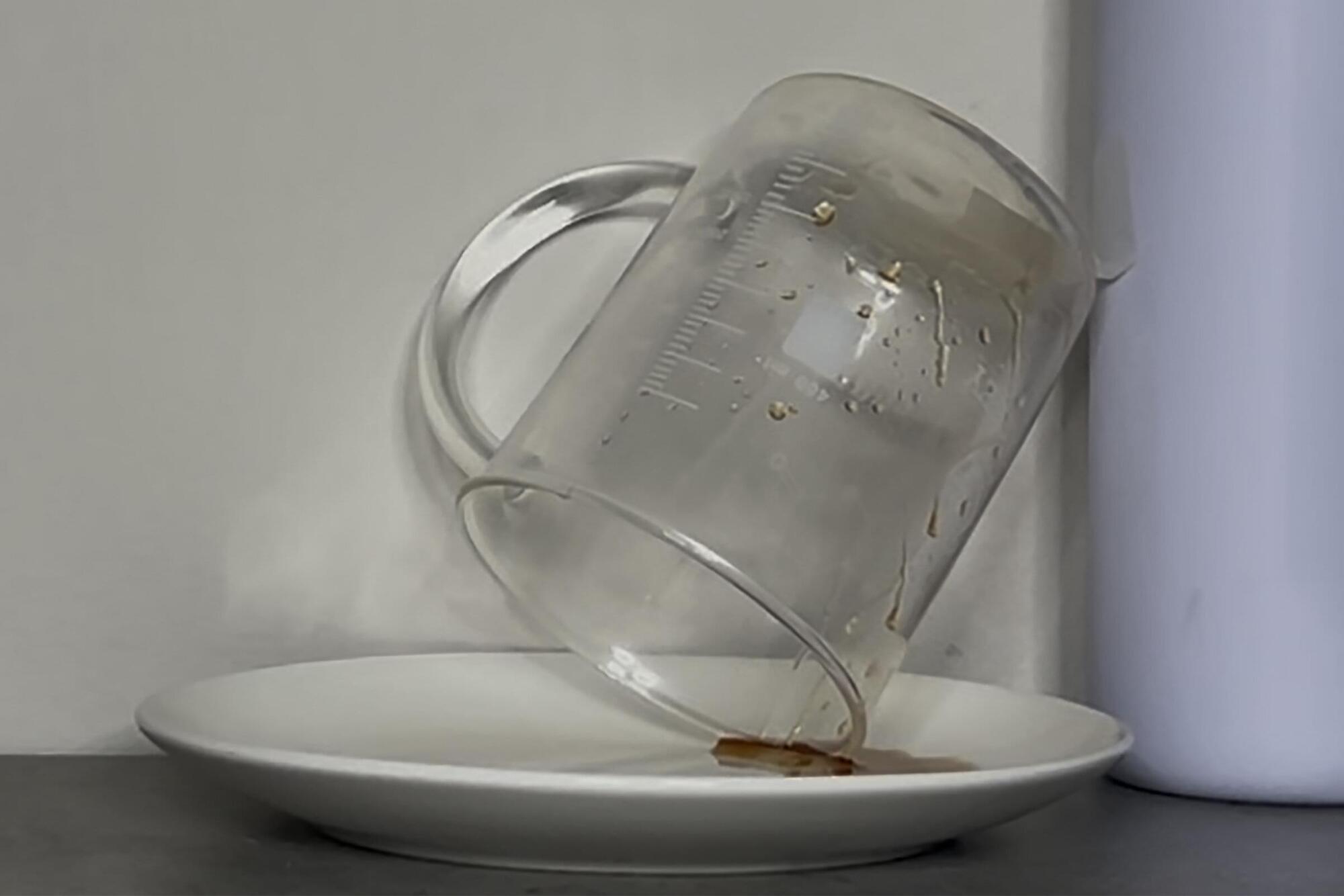
When you reach the bottom of a container of milk or honey, you might be tempted to tip the container over to get that last pesky little bit out. After all, you only need another teaspoon for that recipe, and you’re sure it’s in there. From emptying jars to drying dishes, research about thin film flows in the kitchen highlights everyday connections to physics.
In Physics of Fluids, researchers from Brown University present two related studies about thin film fluid flows in the kitchen: one about the relationship between how long it takes to tip the remaining liquid out of a container and its viscosity, and the other about the ideal time to wait before dumping water out of a wok to minimize rusting—it’s more effective to wait a few minutes to let the water accumulate so there’s more to pour out. “The kitchen is sort of the prime laboratory,” said author Jay Tang. “It deals with a lot of chemistry, materials science, and physics.”
Most people have an intuitive sense of what viscosity is, often described as how thick a fluid feels. It is measured scientifically by applying a certain amount of force to a fluid and measuring its flow rate.