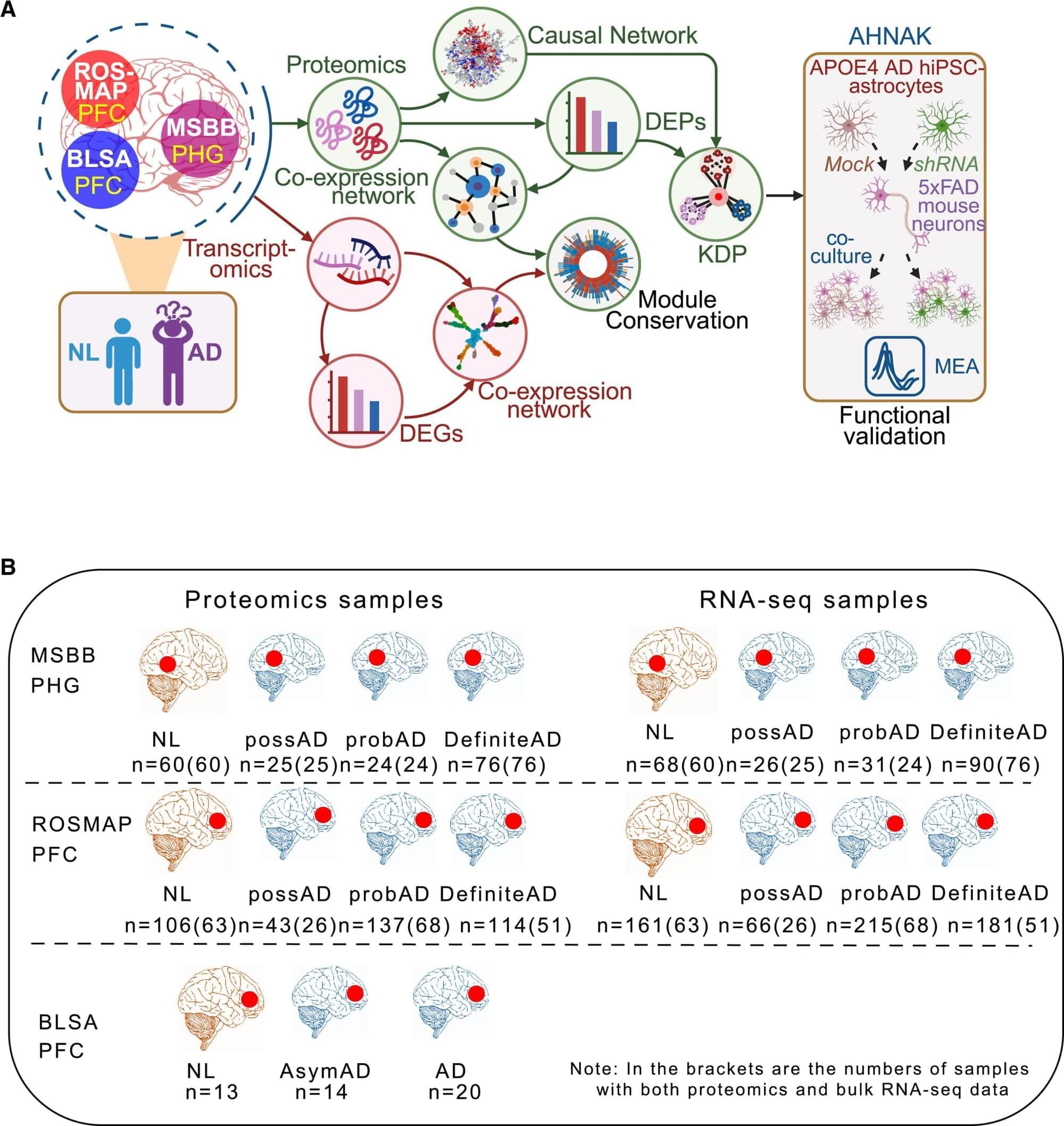
Neurodegenerative diseases form a tangled biological web with overlapping molecular signatures and symptoms. To decode this complexity, a multi-institute collaboration led by St. Jude Children’s Research Hospital scientists developed the pan-neurodegeneration atlas (PanNDA). The atlas is a comprehensive survey of neurodegenerative disease “proteomes” containing information about protein levels, modifications, and interactions. This resource, published today in Cell, provides a wide-ranging protein-based outlook to better understand the origins of neurodegenerative diseases and to aid in their diagnosis and treatment.
Neurodegenerative diseases often stem from protein misfolding or accumulation. These errors also disrupt binding partners, upstream and downstream effectors, and any connected pathways. By combining multiple proteomic strategies, co-corresponding authors Junmin Peng, Ph.D., St. Jude Departments of Structural Biology and Developmental Neurobiology, and Bin Zhang, Ph.D., Department of Genetics and Genomic Sciences at the Icahn School of Medicine at Mount Sinai, created PanNDA to understand and explore this network and how it is disrupted in these diseases.