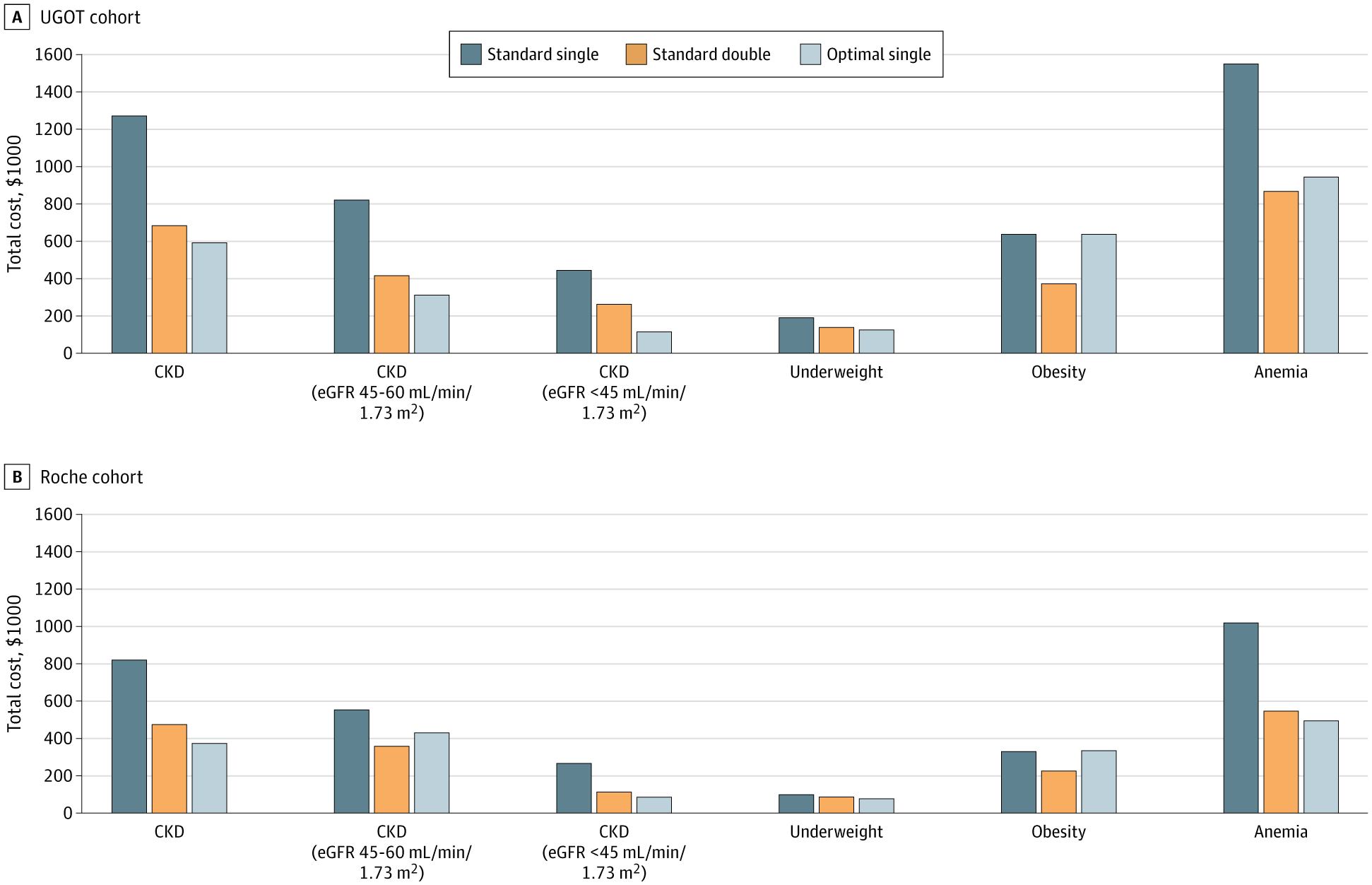
Biologically informed plasma pTau217 thresholds improved diagnostic accuracy for amyloid PET positivity in patients with CKD and anemia vs a standard single cutoff, supporting cost-efficient biomarker implementation in AlzheimerDisease screening.
Question For plasma phosphorylated tau 217–based amyloid-β detection, does the strategy of using biological subgroup–specific optimal single cutoffs or a double cutoff better optimize diagnostic accuracy and cost efficiency?
Findings This cohort study found that subgroup-specific optimal cutoffs improved accuracy over the standard single cutoff, especially in chronic kidney disease (CKD) and anemia. Compared with a double cutoff, the optimal cutoff had similar or better accuracy in CKD with lower cost, whereas a double cutoff was slightly better in underweight and anemia but created intermediates; in obesity, a double cutoff remained superior.
Meaning Biologically optimized cutoffs offer a balanced, cost-efficient default, particularly in CKD and anemia, while a double cutoff retains advantages in obesity.