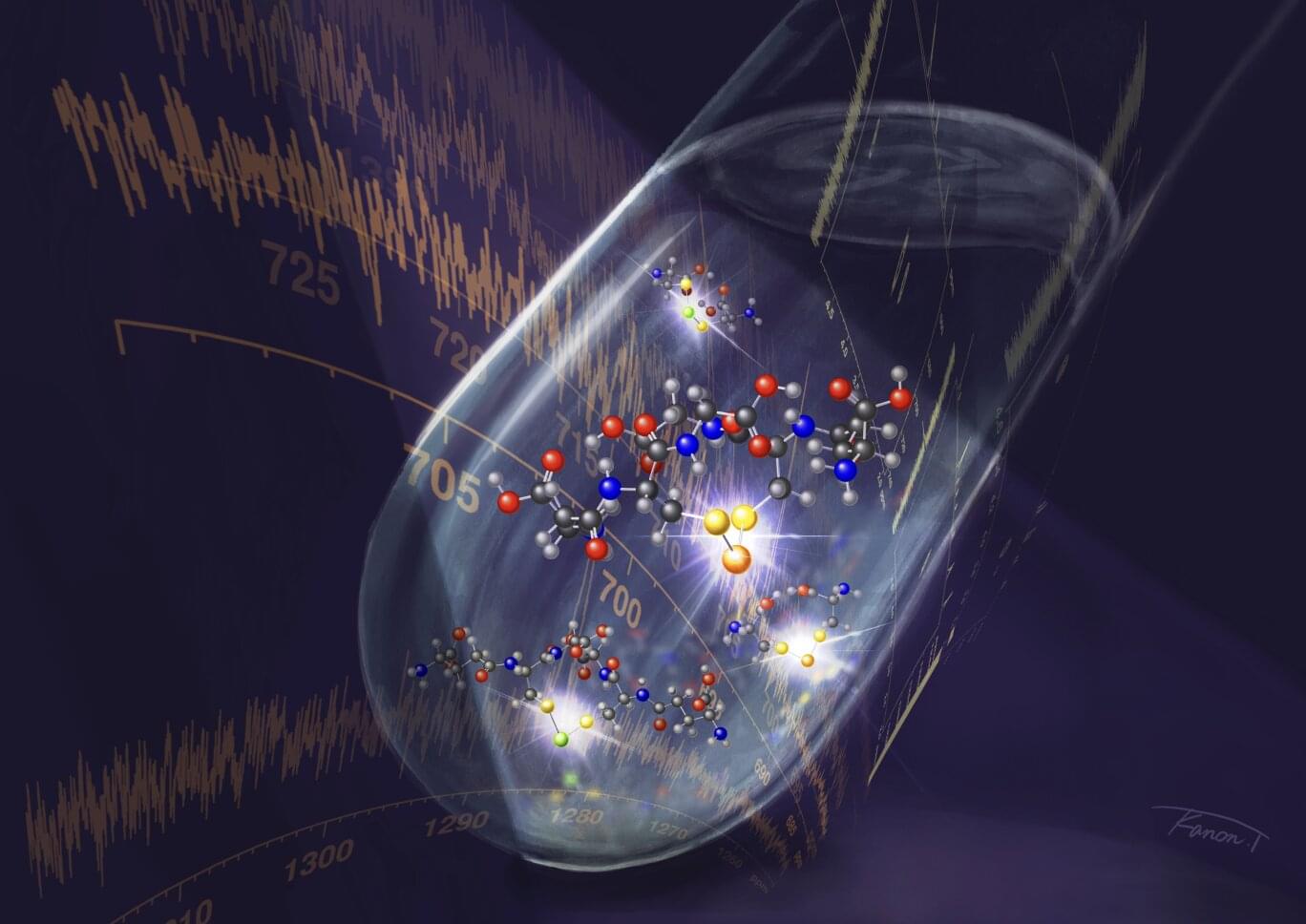
Toward the right side of the periodic table below oxygen, are the chalcogens, or “ore-forming” elements. The chalcogens that occur naturally, including sulfur, selenium and tellurium, are all somehow involved in biological processes. Molecules containing sulfur, like the antioxidant glutathione, play a central role in redox regulation, the balance between oxidation and reduction that is essential for maintaining cellular health.
Recent studies have suggested that the heavier selenium and tellurium are active in biological redox systems as well, but the instability of molecules containing chains of different chalcogen atoms has made structural analysis difficult.
Traditional methods have largely relied on mass spectrometry, which cannot be used to directly observe molecular bonds. This limitation motivated a team of researchers at Kyoto University to develop a method that would allow them to more clearly observe chains of chalcogens. The paper is published in the journal ACS Measurement Science Au.