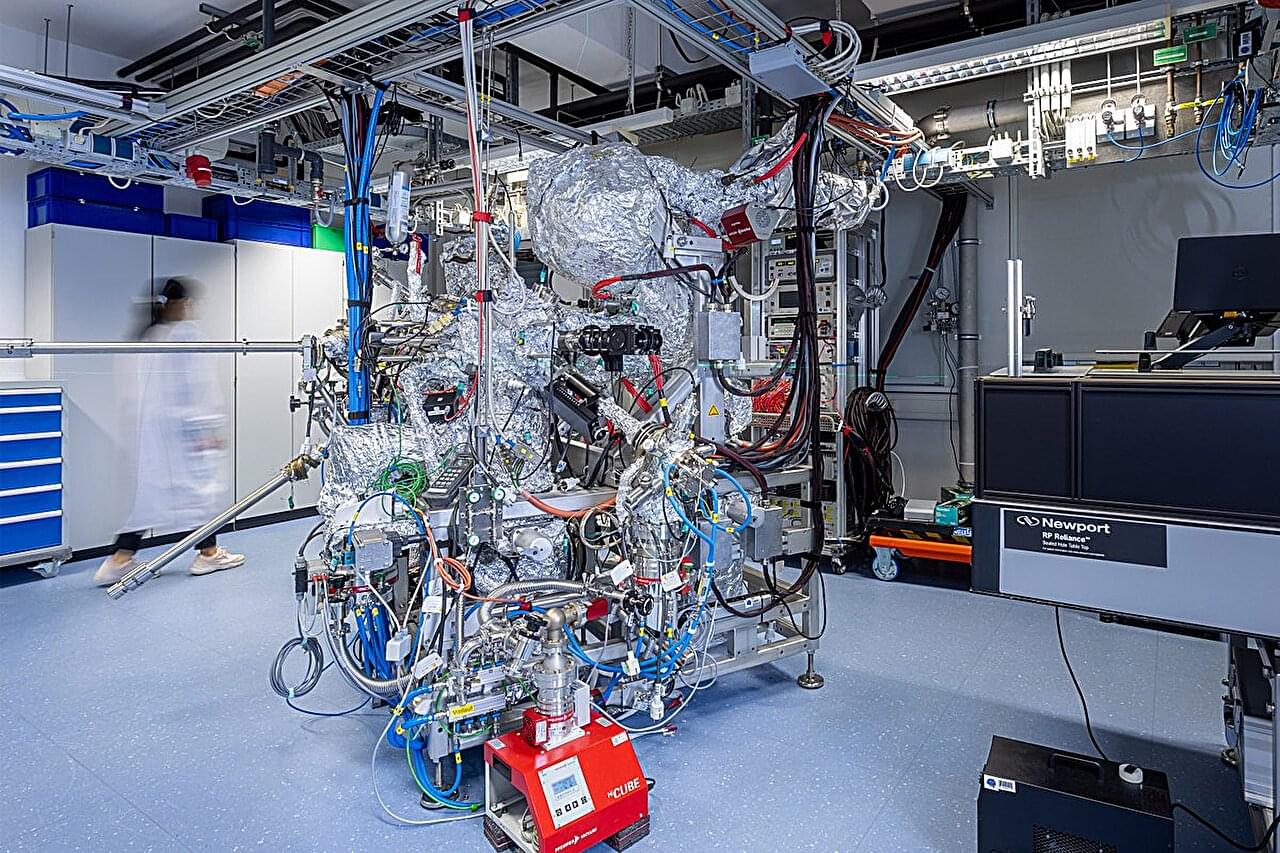
Electrons are tiny and constantly in motion. How they behave in a crystal lattice determines key material properties: electrical conductivity, magnetism, or novel quantum effects. Anyone aiming to develop the information technologies of tomorrow must understand what electrons do. At Forschungszentrum Jülich, a new tool is now available for this purpose: a momentum microscope that was fully developed and built on site. “Internationally, we are currently seeing rapidly growing interest in this method,” explains Dr. Christian Tusche from Forschungszentrum Jülich.
Dr. Christian Tusche already played a key role in advancing momentum microscopy during his time at the Max Planck Institute of Microstructure Physics in Halle. Since moving to Jülich in 2015, he has continued to drive its development forward. His work has been recognized with several awards, including the Kai Siegbahn Prize in 2018 and the Innovation Award on Synchrotron Radiation in 2016. Most recently, he published a review article on the method in the journal Applied Physics Letters.
In recent years, numerous instruments have been commissioned at synchrotron facilities and X-ray lasers around the world. “The new device we built together with the Mechanical Workshop is a real innovation. There is currently nothing like it available from any specialist company,” says Dr. Tusche.