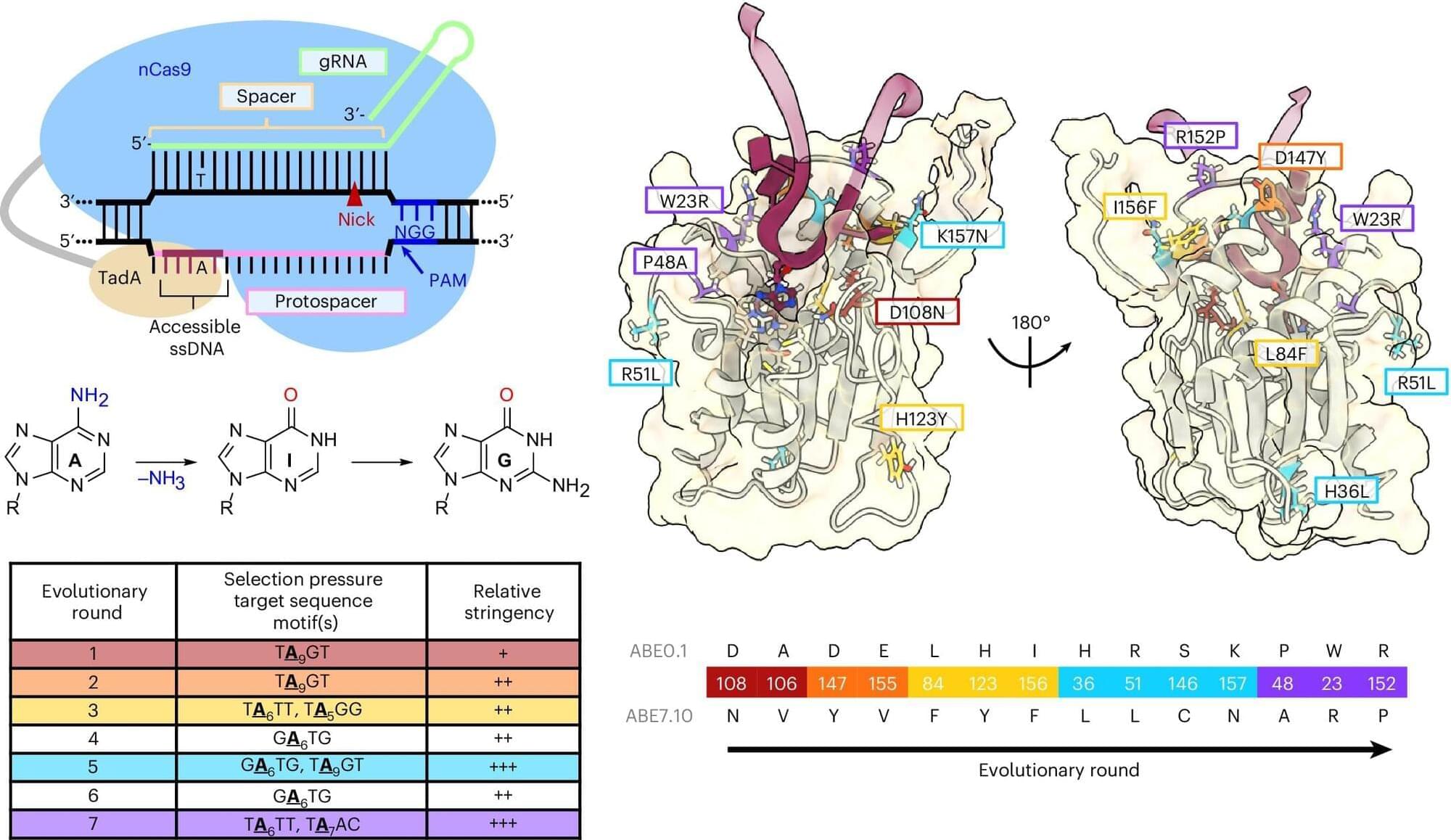
The trajectory of base editing has been remarkable, progressing from the laboratory to patient care, treating debilitating or terminal illnesses, in less than a decade. A type of gene editing that makes chemical changes to our DNA, base editing was developed by Alexis Komor, associate professor in the Department of Biochemistry and Molecular Biophysics at the University of California San Diego.
For all of base editing’s success, it is still a relatively new technology, and researchers like Komor are working to improve its efficiency, while lowering the incidence of unwanted edits. One type of unwanted edit is called a bystander edit. This occurs when a base editor not only edits the desired nucleobase, but also edits surrounding bases as well. Komor’s lab has developed a way to minimize bystander edits. This work appears in Nature Biotechnology.