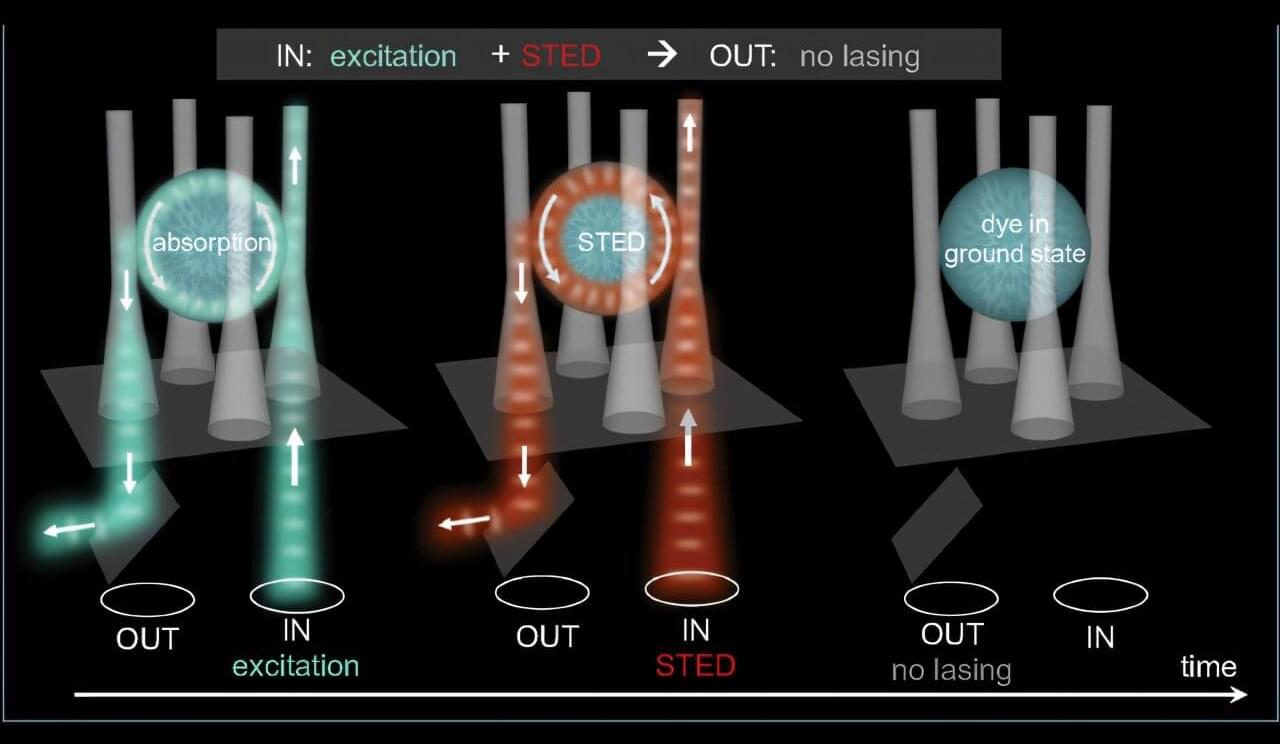
Controlling light with light is a long-sought goal for computing and communication technologies. Achieving this capability would allow optical signals to be processed without converting them into electrical signals, potentially enabling faster and more energy-efficient devices. In recent years, researchers have begun exploring an unexpected platform for this purpose: soft matter.
Soft-matter photonics investigates how materials such as liquids, liquid crystals, gels, and polymers can self-organize into structures that manipulate light. Unlike conventional solid-state photonic components, which require precise nanofabrication, soft materials can spontaneously form functional optical geometries. Some soft materials also exhibit nonlinear optical behavior. For example, through the Kerr effect, their refractive index can change in response to intense light, enabling one beam to influence another and allowing ultrafast optical switching on picosecond timescales.
As reported in Advanced Photonics, an international team of researchers introduced a different approach: a nanosecond optical switch based on resonant stimulated-emission depletion (STED) in a liquid crystal cavity. Rather than relying on refractive index changes, this method manipulates the stored optical energy inside a resonant structure.