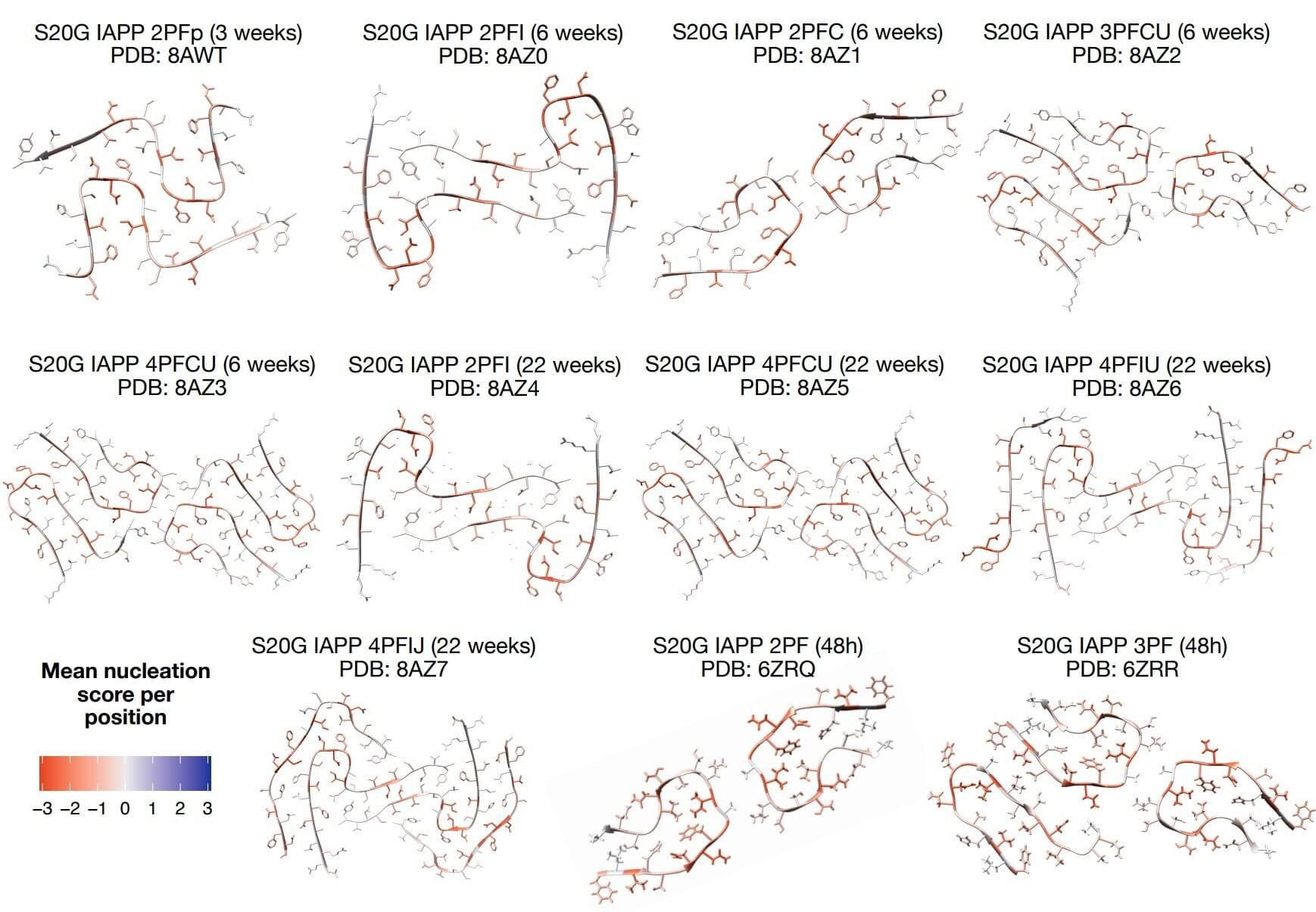
Researchers at the Institute for Bioengineering of Catalonia (IBEC) have produced a mutational map showing how mutations in amylin—a hormone that plays a key role in glucose regulation—affect its tendency to form toxic amyloid aggregates in the pancreas. This process is linked to the development of type 2 diabetes. While it was already known that certain mutations could alter this aggregation capacity, understanding of this process was fragmented and based on isolated studies. The research is published in the journal Nature Communications.
“For the first time, we can systematically map how thousands of mutations modulate amylin aggregation, bringing human genetics closer to molecular mechanisms,” says Benedetta Bolognesi, the principal investigator of the Protein Phase Transitions in Health and Disease group at IBEC, who is also the lead author of the study.
“We have created a map that allows us to anticipate the potential impact of these mutations in the population,” adds Marta Badia, a researcher in the same group and first author of the study. “We are not assessing toxicity, but rather the protein’s intrinsic propensity to form fibers. This is a first step, but an extremely necessary one.”