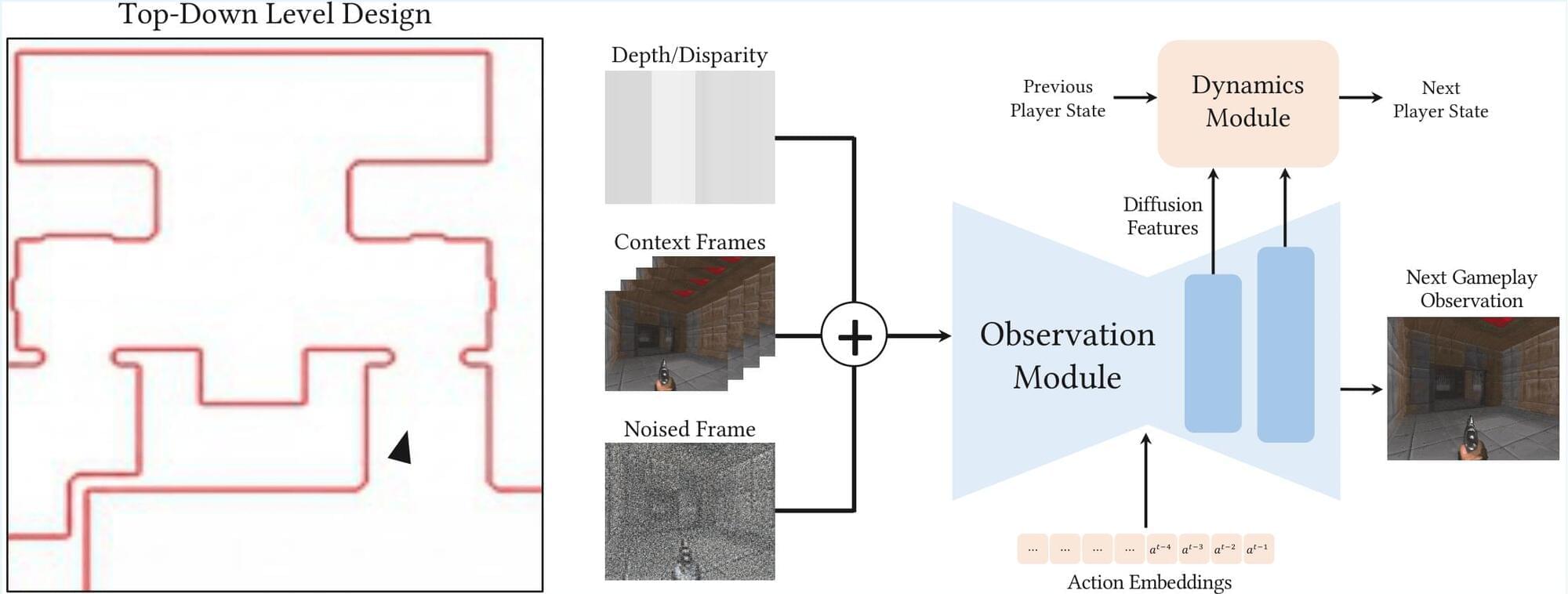
Think of a video game that doesn’t just run on code, but is “dreamed up” in real-time by an AI—much like how AI generates videos or images today. While this technology (known as a Diffusion Game Engine) is incredibly exciting, it has long faced two major hurdles: you couldn’t easily “edit” the world once it was generated, and you couldn’t play in that world with friends because the AI couldn’t keep the environment consistent for everyone at once.
Traditional AI game engines work like “next-frame predictors.” They look at what’s happening right now and guess what the very next split-second should look like. Because they have a short memory (a “context window”), the world often feels like a shifting dream—turn around, and the door you just walked through might have disappeared or changed color. This makes it impossible to design a specific “level” or play with others, as the AI can’t keep a steady map in its head.