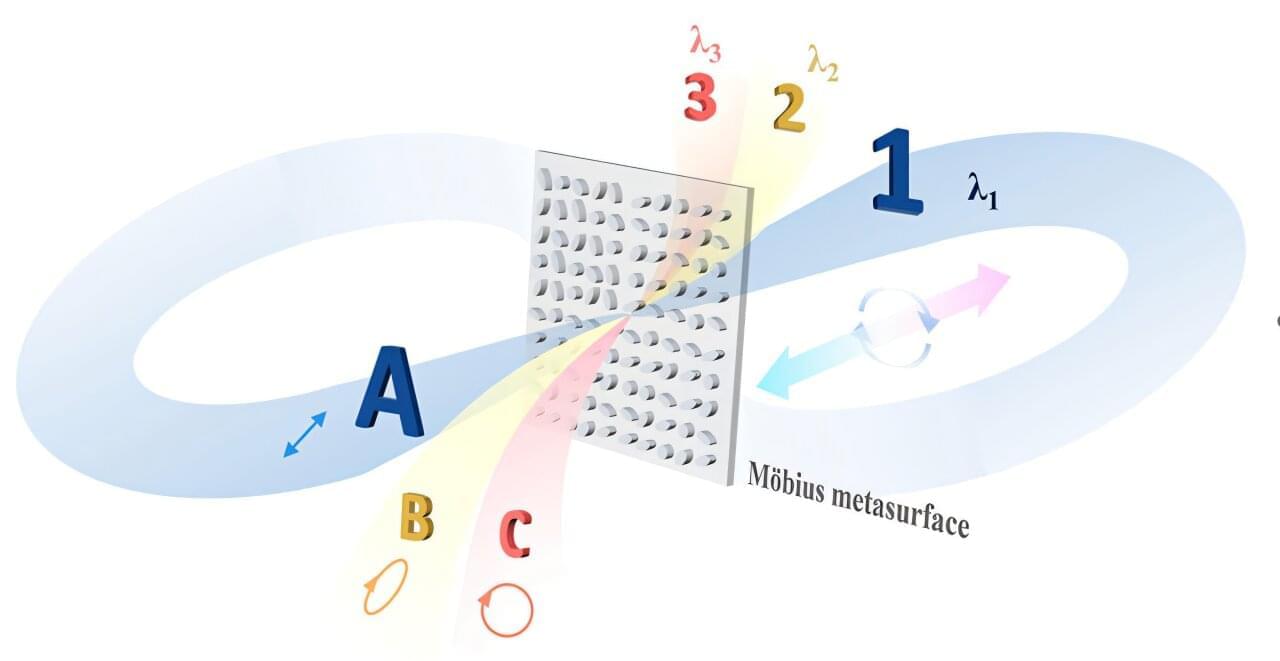
Light is an unusually rich carrier of information. Its direction of travel, wavelength, and polarization can all be used to encode signals or images. Yet controlling these properties independently remains difficult, especially when light can enter a device from either side.
In most optical materials—and even in many metasurfaces—the laws of reciprocity and time-reversal symmetry tightly link how a device behaves for forward and backward illumination. As a result, truly different responses in the two directions are hard to achieve in a compact optical element.
The challenge grows sharper when polarization is included. Many metasurfaces work only with simple polarization states, such as horizontal and vertical or left-and right-circular polarization.