The molecular-scale design of materials is one of the major frontiers in modern science. Flat, highly conjugated organic molecules are already used in advanced technologies such as chemical sensors, optoelectronic devices, and energy conversion systems. One of the most promising strategies to enhance their performance involves “linking” multiple units together, extending their electronic structure and thereby modifying their properties.
However, as these architectures grow in complexity, their synthesis becomes extremely challenging. In many cases, the molecules lose solubility and become nearly inaccessible through traditional solution-based methods. This limitation has hindered the construction of increasingly large and functional molecular structures for years.
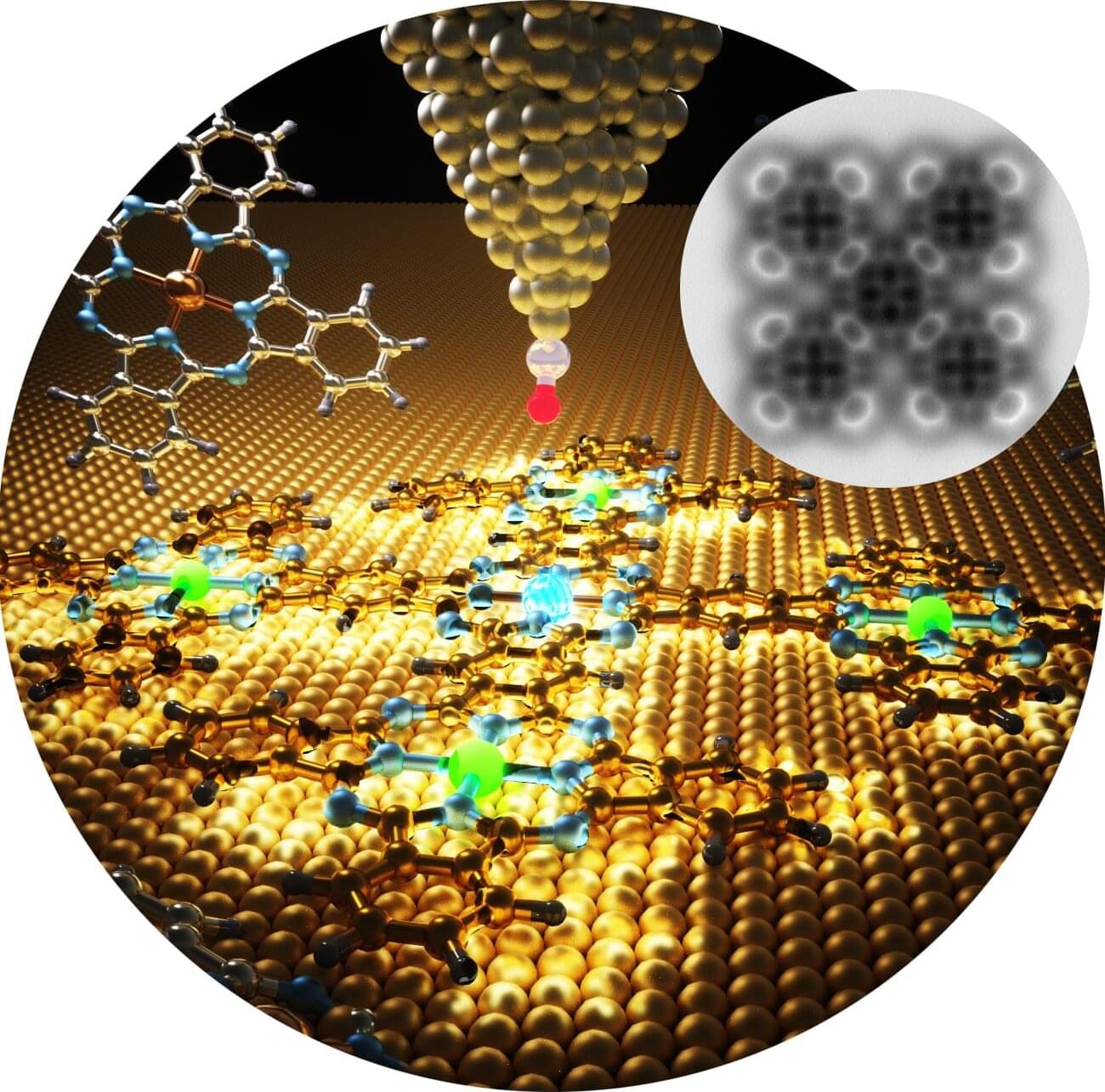
Research led by Luis M. Mateo and Diego Peña at the Center for Research in Biological Chemistry and Molecular Materials (CiQUS) has overcome this barrier using a hybrid strategy. First, they synthesize carefully designed phthalocyanine units in solution. These units are then deposited onto a metal surface, where they react with each other to form a new extended structure composed of five cross-shaped, fused phthalocyanines. This approach combines the precision of classical solution chemistry with the possibilities offered by on-surface synthesis under controlled conditions.