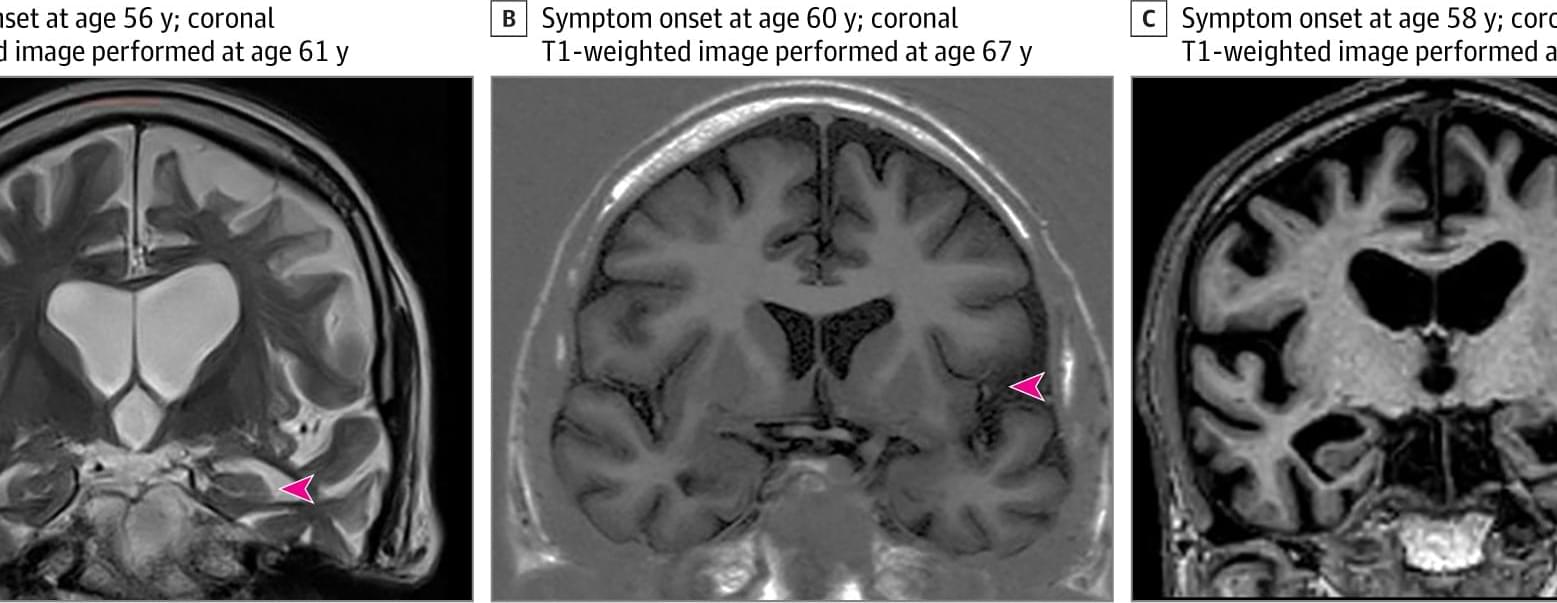
Patients treated with cadaveric pituitary-derived human growth hormone contaminated with amyloid-β developed early-onset AlzheimerDisease with prominent language deficits and histopathological features consistent with AD.
Question What are the clinical and postmortem findings in iatrogenic Alzheimer disease (iAD) consequent to treatment with cadaveric pituitary–derived human growth hormone (c-hGH)?
Findings This case series describes a c-hGH recipient with early-onset dementia and prominent language involvement, in whom postmortem examination showed unequivocal neuropathological features of AD, including severe tauopathy. Three additional c-hGH recipients have similar cognitive syndromes characterized by prominent language involvement.
Meaning These results demonstrate that patients with iAD can have histopathological findings classically found in sporadic AD and that prominent language involvement might be an important phenotypic feature in this AD subtype.