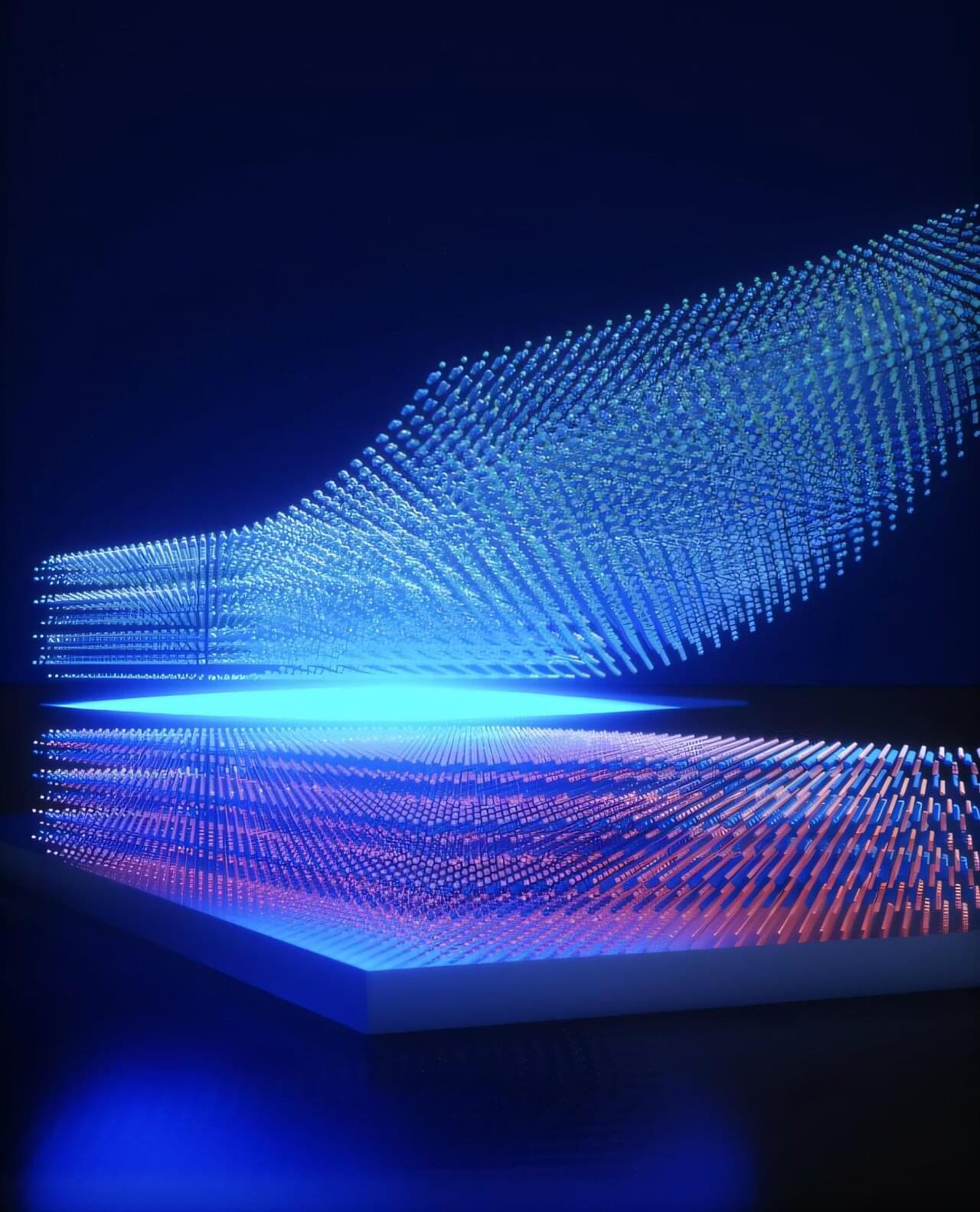
In a first for the field, materials scientists from The Grainger College of Engineering at the University of Illinois Urbana-Champaign have interfaced two materials to artificially generate a highly conductive ferroelectric charged domain wall. Led by associate professor of materials science and engineering Arend van der Zande and graduate student Shahriar Muhammad Nahid (now a postdoc at Stanford) and published in Advanced Materials, their approach highlights the versatility of charged domain walls in 2D materials and may be used in the future development of neuromorphic devices and reconfigurable electronics.
2D materials are valued for their utility in molecular-scale systems, which are used to create new kinds of memory and molecular electronic architectures. While most materials must be grown naturally layer by layer, 2D materials can be stacked like building blocks to create arbitrary structures.
One emerging 2D material of interest is indium selenide (α-In2Se3), a layered semiconductor that is also ferroelectric. Ferroelectric materials exhibit spontaneous and mutable electric polarization—something that piqued the interest of van der Zande and Pinshane Huang, professor of materials science and engineering.