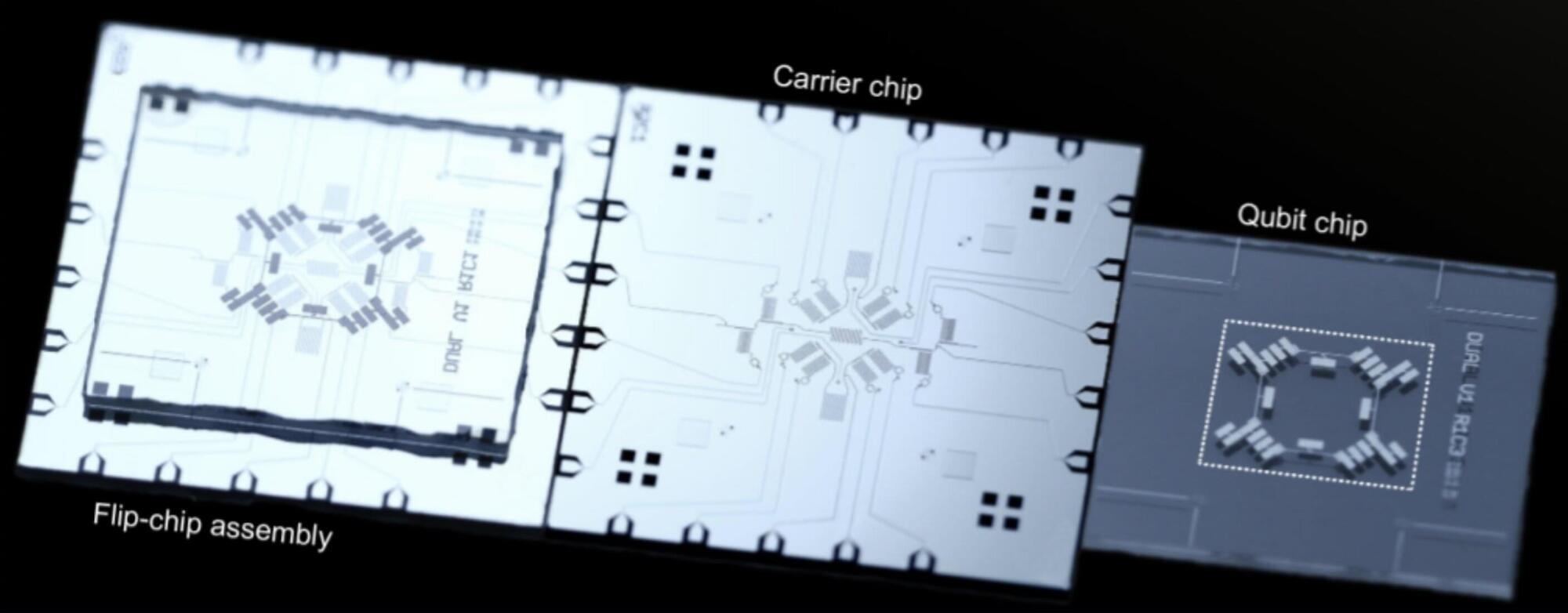
Quantum computers, systems that process information leveraging quantum mechanical effects, could outperform classical computers on some advanced tasks. These systems rely on qubits, the fundamental units of quantum information, that become linked via an effect known as quantum entanglement and share a unified quantum state.
Qubits are known to be highly sensitive to slight changes or disturbances in their surrounding environment, also referred to as noise. Noise can prompt them to lose quantum information via a process called decoherence, which in turn leads to errors.
In recent years, quantum scientists and engineers have introduced various approaches aimed at mitigating or correcting quantum errors, with the goal of realizing fault-tolerant quantum computing. Some of these approaches rely on so-called erasure qubits, qubits whose errors are easier to detect and locate in real time.