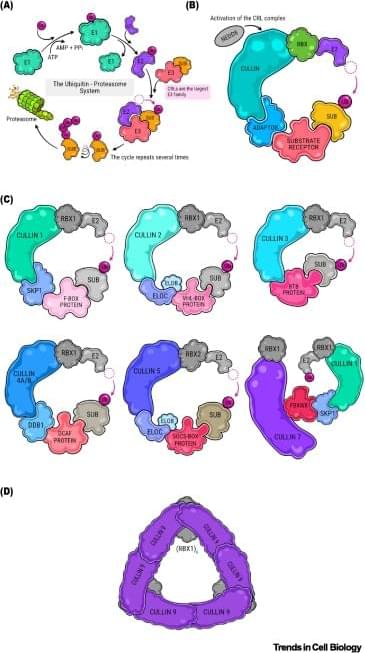
The researchers present the first integrative catalogue of 267 cullin–RING substrate receptors, of which 93 are linked to germline disorders.
The most frequent substrate receptor (SR)-related diseases are neurodevelopmental, neuromuscular, and congenital organ/skeletal syndromes.
Disease associations are shaped by substrate context rather than tissue enriched expression.
Pathogenicity arises through altered degron recognition, disrupted complex assembly, dosage imbalance, or ubiquitin–proteasome system-independent functions.
Distinct variants in the same SR can yield divergent phenotypes, reflecting dosage sensitivity and developmental context.
Patient alleles inform diagnosis and therapeutic strategies, positioning SRs as central nodes connecting proteostasis, rare-disease genetics, and targeted protein degradation. sciencenewshighlights ScienceMission https://sciencemission.com/Cullin%E2%80%93RING-receptors
The ubiquitin–proteasome system governs selective protein turnover in all eukaryotes, and its cullin–Really Interesting New Gene (RING) ligases represent the largest class of E3 ligases. Their substrate receptors (SRs) act as the ‘specificity engines’ of degradation, yet their contribution to human genetic disease has only recently come into focus. In this review, we provide the first systematic catalogue of 267 SRs, of which 93 are now linked to germline disorders. We synthesise emerging mechanisms, from altered degron recognition to noncanonical SR functions, and highlight how patient variants illuminate pathways for diagnosis and therapy. By connecting proteostasis, rare-disease genetics, and targeted protein degradation, SRs emerge as central nodes with broad implications for precision medicine.