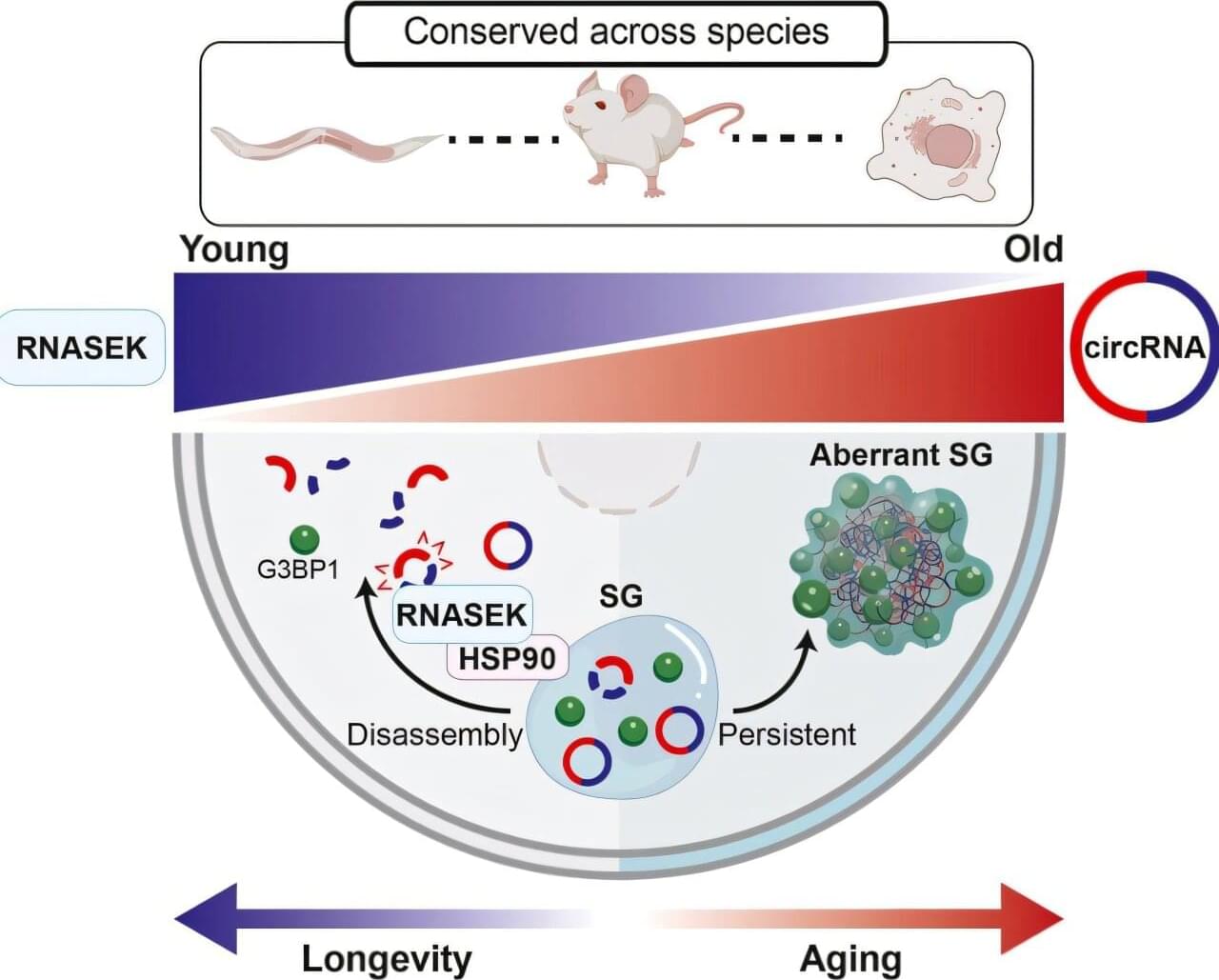
Cells in our bodies produce RNA based on genetic information stored in DNA, and RNA serves as a blueprint for making proteins. Researchers at KAIST have discovered a new phenomenon: Removing “circular RNA” that accumulates in cells as we age can slow down aging and extend lifespan. This study provides crucial clues for uncovering the principles of aging and developing treatment strategies for related diseases.
Professor Seung-Jae V. Lee’s research team (RNA-Mediated Healthspan and Longevity Research Center) from the Department of Biological Sciences, in collaboration with research teams led by Professors Yoon Ki Kim and Gwangrog Lee, discovered the RNASEK protein —an enzyme that degrades circular RNA—plays a vital role in slowing aging and extending lifespan. The findings are published in the journal Molecular Cell.
Until now, circular RNA was primarily known as a “marker of aging” because of its high stability, causing it to accumulate in cells without being degraded as one ages. However, the molecular mechanism for removing this RNA and its direct link to aging had not been clearly identified. The research team conducted this study to determine how the accumulation of circular RNA affects aging and whether an intracellular management system exists to regulate it.