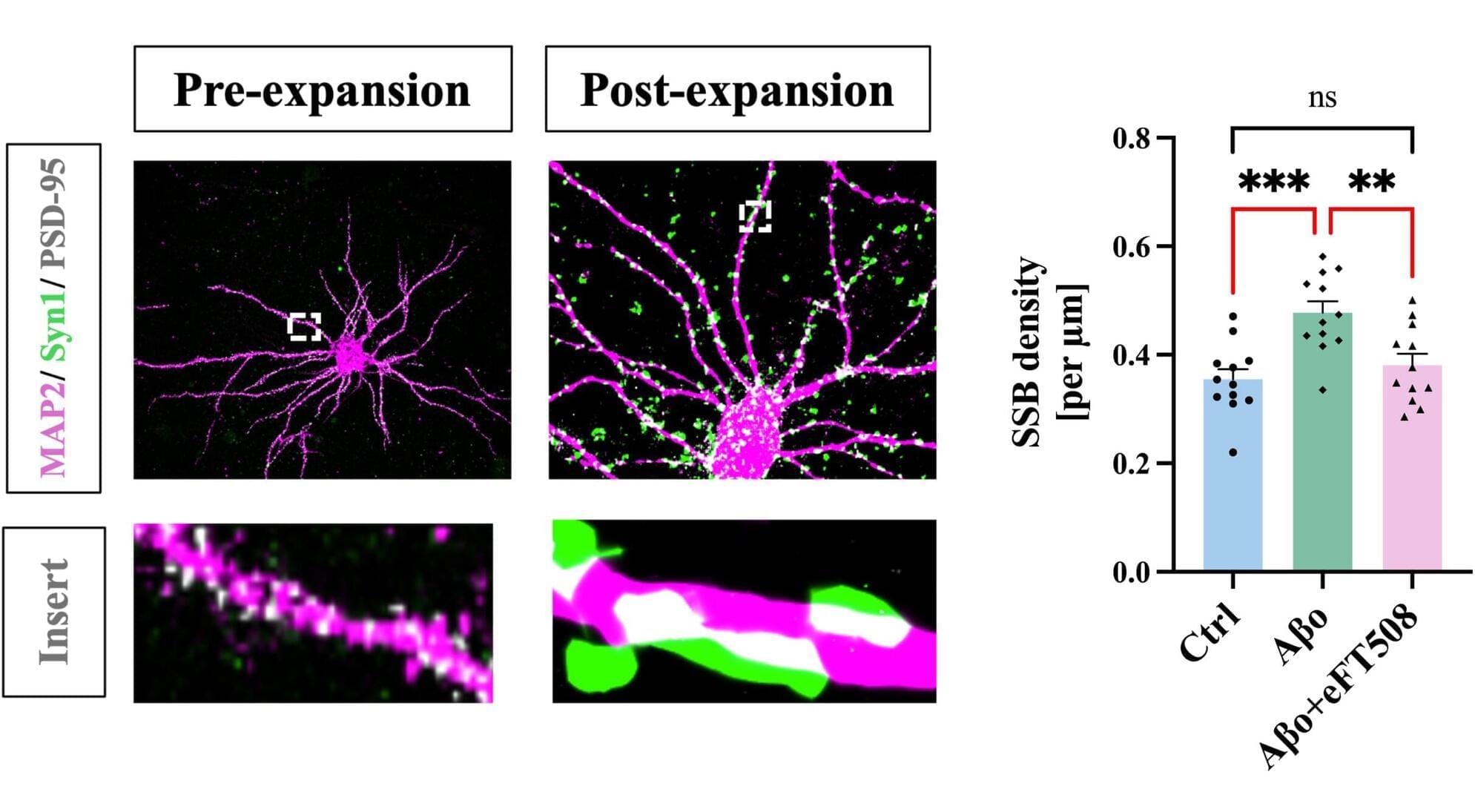
Neuroscientists at King’s College London have pinpointed a mechanism behind the increased neural connectivity observed in the very early stages of Alzheimer’s disease. Published in Translational Psychiatry, the study also demonstrated that a cancer medication has the potential to reduce this hyperconnectivity.
The research showed that low levels of the protein amyloid-beta could induce hyperconnectivity and this pattern closely resembled changes seen in the brains of people with mild cognitive impairment (MCI). Amyloid-beta is thought to be instrumental in Alzheimer’s disease, where it creates plaques—or sticky clumps of amyloid-beta proteins—around the neurons.
These new findings suggest that low levels of amyloid-beta alone are enough to trigger early, disease-relevant changes in how brain cells connect.