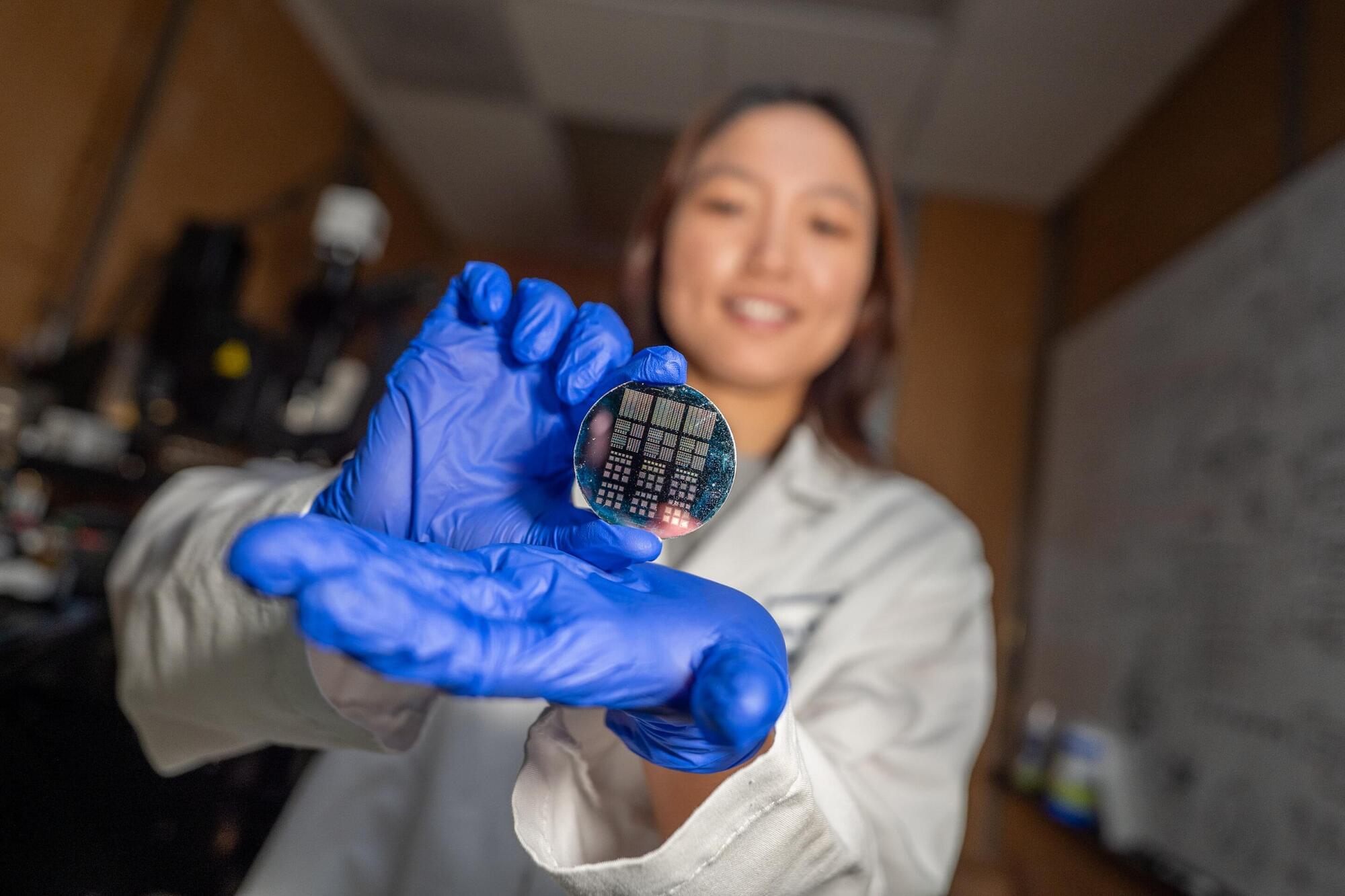
A team led by engineers at the University of California San Diego has developed a new brain-inspired hardware platform that could help computer hardware keep pace with the explosive growth of artificial intelligence. By combining memory and computation on the same chip—and allowing its components to interact collectively like neurons in the brain—the brain-inspired platform improved the speed, accuracy, and energy efficiency of pattern recognition in two simulated tasks: recognizing spoken digits and detecting epileptic seizures early from brain-wave recordings.
The approach could lead to the development of compact, energy-efficient hardware for smaller AI systems such as those used in wearable health monitors, smart sensors, and other autonomous devices.
The work, published on March 9 in Nature Nanotechnology, falls within the field of neuromorphic computing, which aims to build machines that mimic how the brain processes information. The researchers emphasize that the technology is brain-inspired, rather than brain-like; it draws ideas from how neural networks interact but does not attempt to replicate the brain itself.