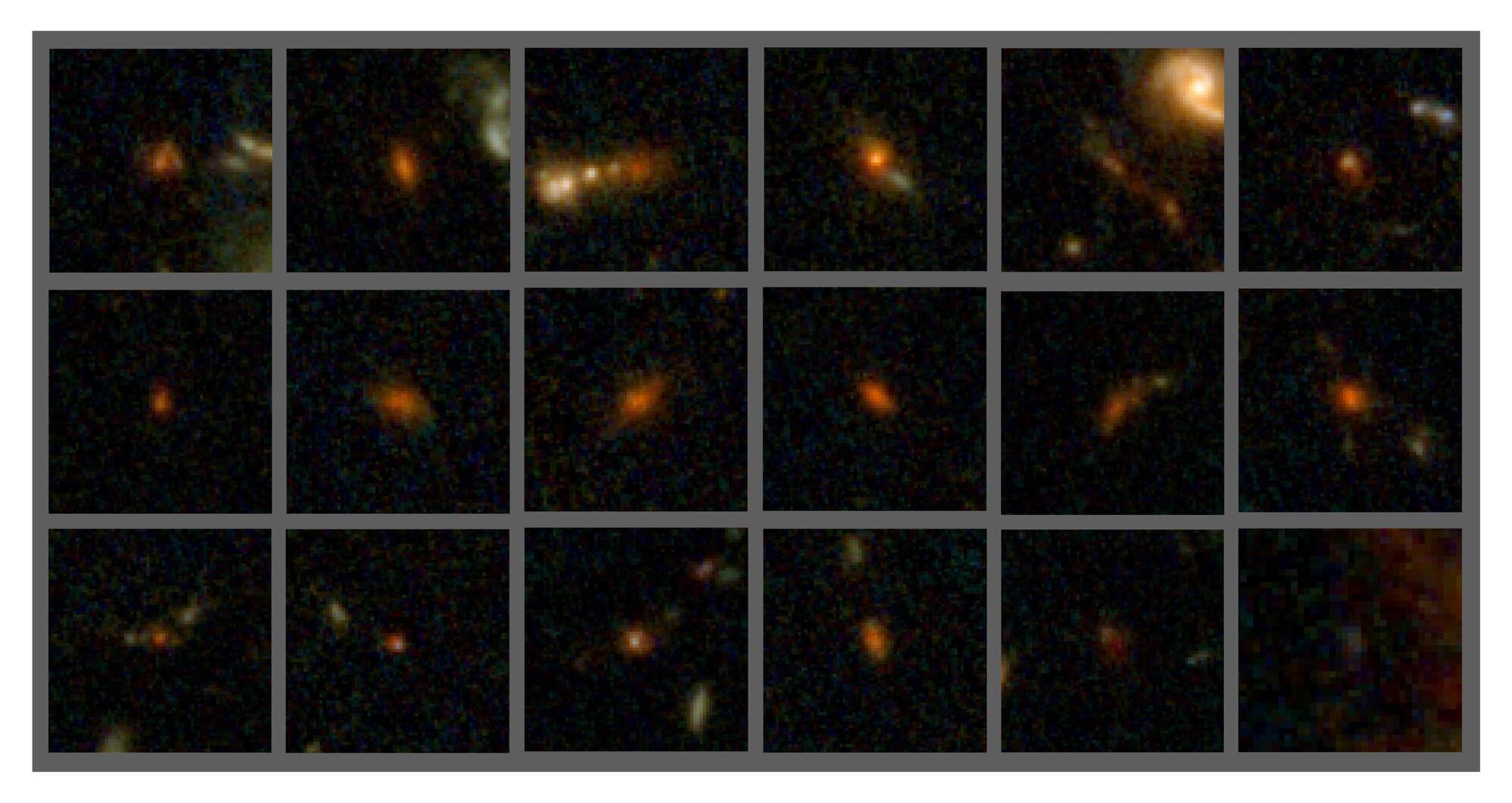
A team of 48 astronomers from 14 countries, led by the University of Massachusetts Amherst, has discovered a population of dusty, star-forming galaxies at the far edges of the universe that formed only a billion years after the Big Bang, believed to have occurred 13.7 billion years ago. The galaxies may represent a snapshot in the galactic life cycle, linking recently discovered ultradistant bright galaxies formed 13.3 billion years ago with early “quiescent” (dead) galaxies that stopped forming stars about two billion years after the Big Bang.
Challenging what we know about cosmos The new discovery challenges current models of the universe, making the findings, published in The Astrophysical Journal Letters, a step toward revising cosmic history.
“My research involves trying to identify and understand a population of rare, dusty star-forming galaxies that were only discovered at the end of the 1990s,” says Jorge Zavala, assistant professor of astronomy at UMass Amherst and the paper’s lead author.