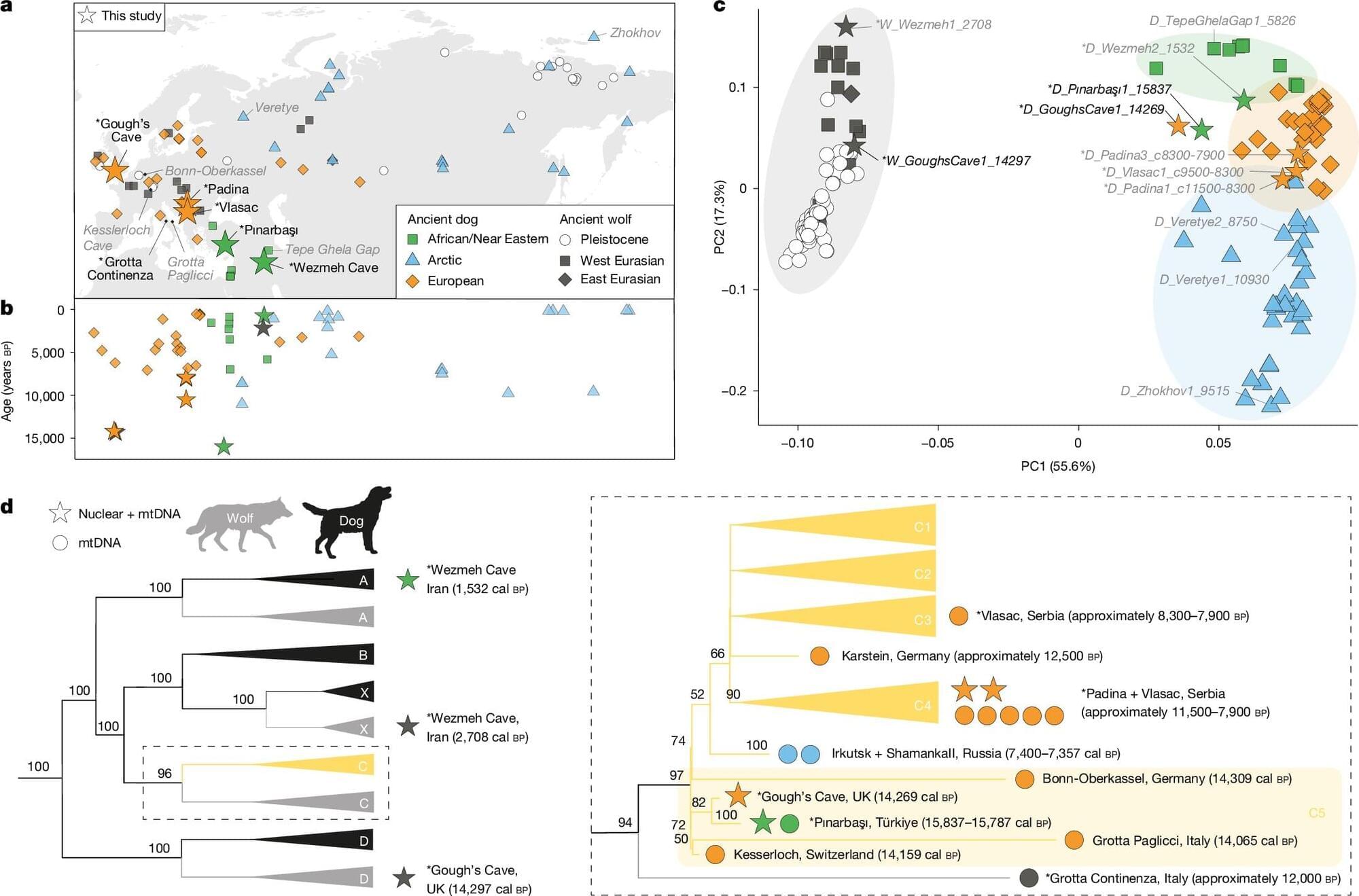
Evidence of some of the earliest dogs has been identified at two University of Liverpool/British Institute at Ankara archaeological excavation projects in central Anatolia, Turkey. Shedding new light on the development and spread of early domestic dogs, the findings are documented in two papers published in Nature.
Providing fascinating insights into dogs’ relationships with people and their rapid spread across Europe and Anatolia, the work involved zooarchaeologists from University College London, University of Liverpool and based in Turkey and ancient DNA and isotope teams from the Natural History Museum, the Universities of Oxford and York, the Francis Crick Institute, and LMU Munich.
Two of the key excavation sites used are led by the University of Liverpool’s Professor Douglas Baird—Pınarbaşı excavated with Karaman museum and Boncuklu excavated with co-directors Professor Fairbairn, University of Queensland and Associate Professor Mustafaoĝlu, Ankara Hacı Bayram Veli University. Together, the sites span the transition from the Epipaleolithic (latest Paleolithic) to early Neolithic dated 16,000 to 10,000 years ago.