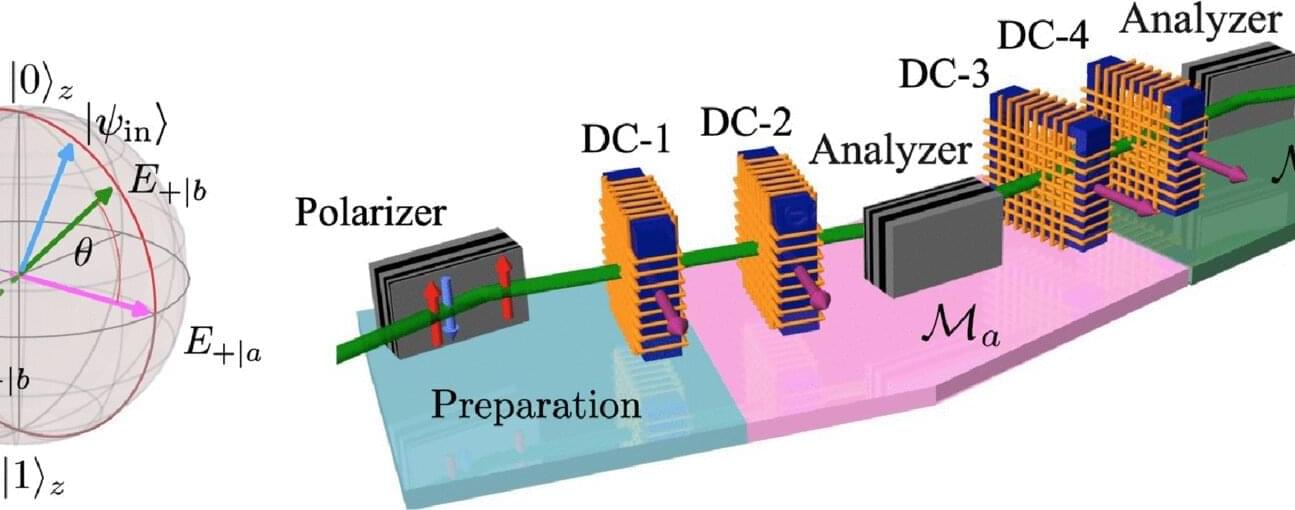
One of the most striking features of quantum physics is that certain properties cannot be measured at the same time. Every measurement may inevitably affect the object’s physical state being measured—and therefore also the outcome of any subsequent measurement. How fast something is moving, for example, can depend on whether its position was measured beforehand.
How strongly a measurement intervenes in the quantum state determines how reliably the result of a second measurement can be predicted from the first. This qualitative connection has been known for a long time. What is new, however, is that researchers at TU Wien have now found a formula that allows this effect to be quantified exactly.
They discovered a simple “uncertainty relation” that links measurement disturbance and measurement correlation. Using this relation, it becomes possible in a remarkably straightforward way to determine which combinations of quantum operations are possible—and which are fundamentally excluded. Their paper is published in the journal Physical Review Research.