An international study has revealed a surprising connection between quantum physics and the theoretical models underlying artificial intelligence. The study results from a collaboration between the Institute of Nanotechnology of the National Research Council (Cnr-Nanotec), the Italian Institute of Technology (IIT), and Sapienza University of Rome, together with international research institutions. The research paper was published recently in the journal Physical Review Letters.
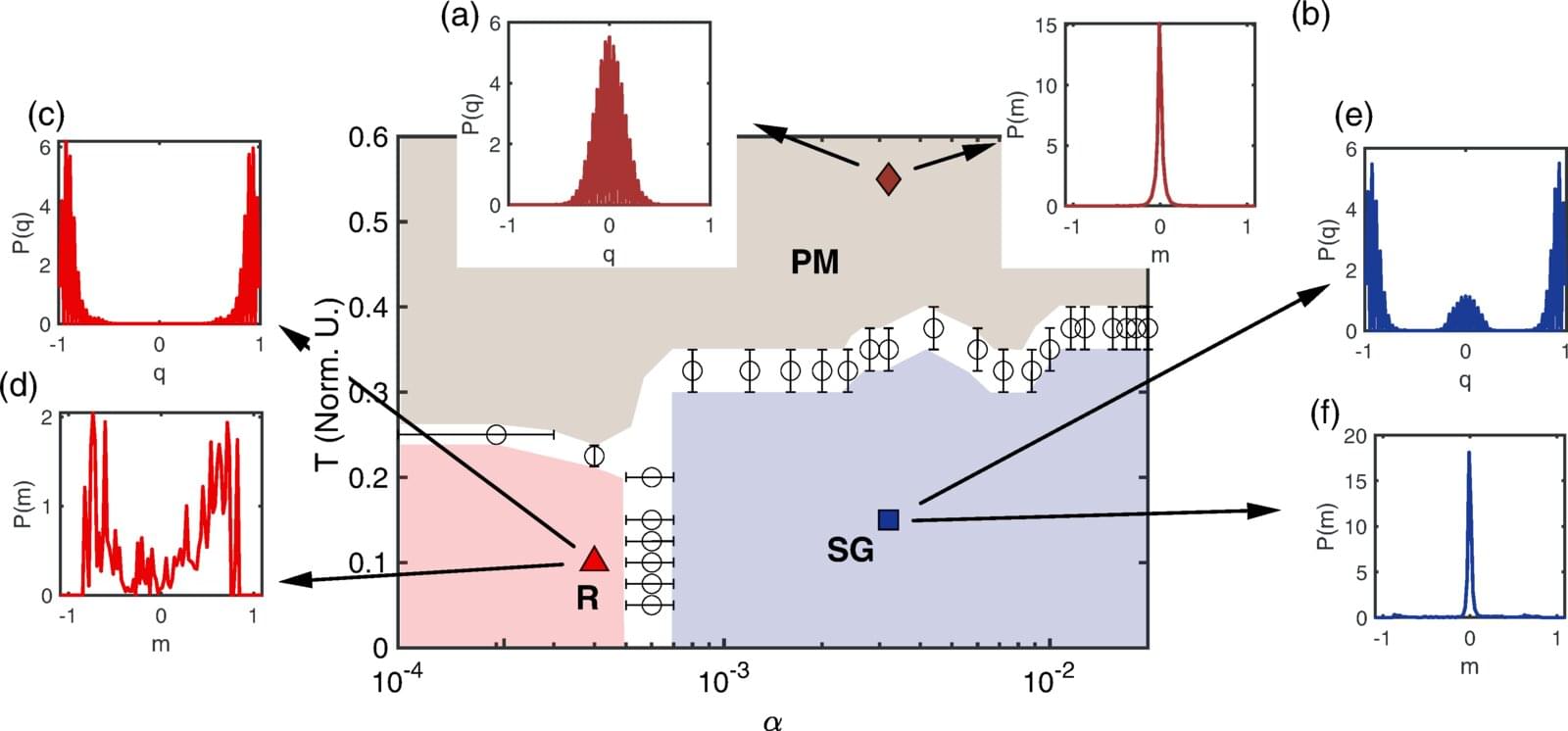
Italian researchers show that identical photons propagating within optical circuits spontaneously behave like a Hopfield Network, one of the best-known mathematical models used to describe the associative memory mechanisms of the human brain.
“Instead of using traditional electronic chips, we exploited quantum interference —the phenomenon that occurs in photonic chips when particles of light overlap and interact with one another to encode and retrieve information,” explains Marco Leonetti, coordinator and corresponding author of the study, senior researcher at Cnr-Nanotec and affiliated with the Center for Life Nano-and Neuro-Science at the Italian Institute of Technology (IIT) in Rome. “In this system, photons are not merely carriers of data, but themselves become the ‘neurons’ of an associative memory.”