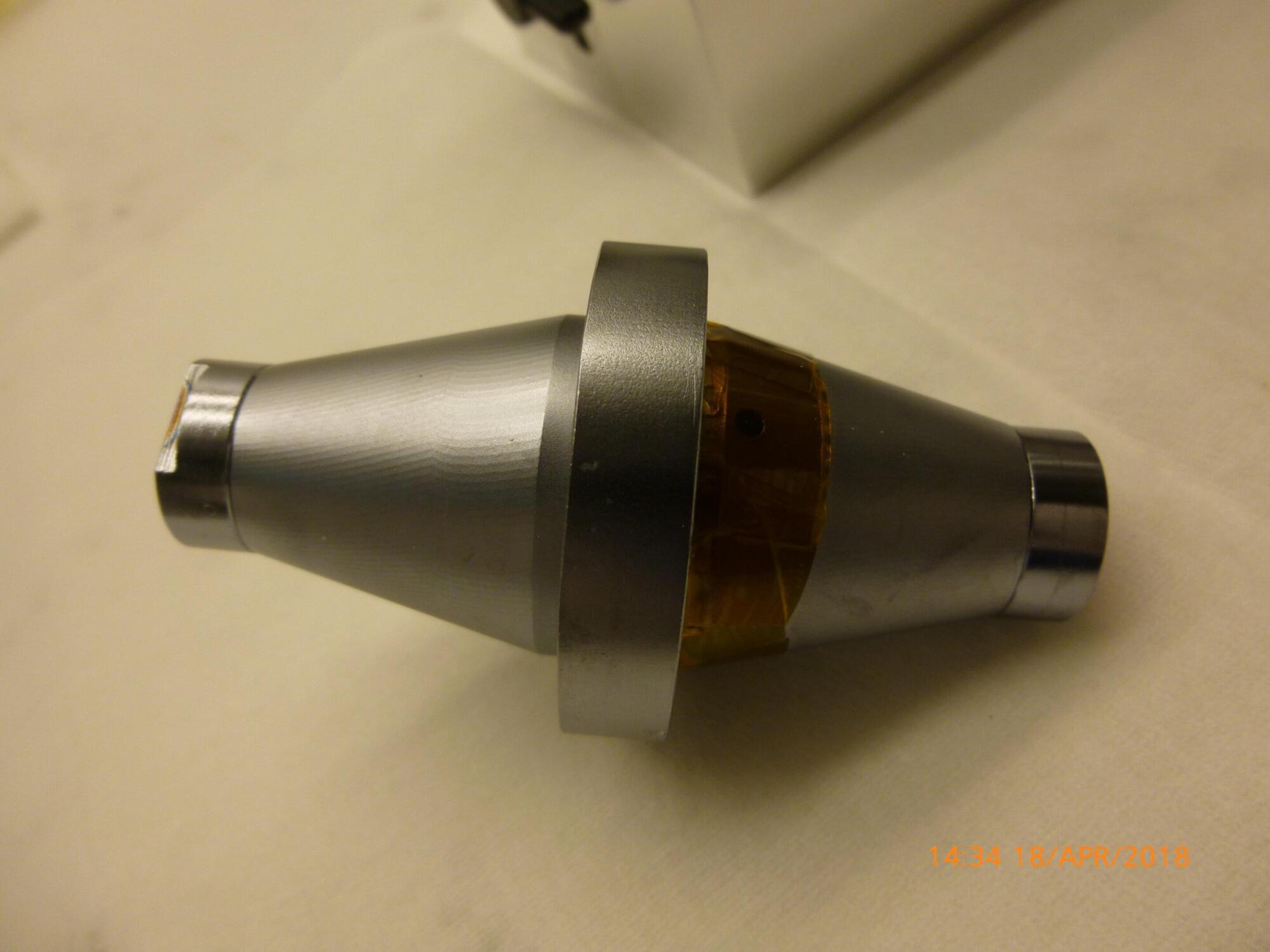
Lasers, devices that emit intense beams of coherent light in specific directions, are widely used in research settings and are central components of various technologies, including optical clocks (i.e., systems that can keep time relying on light waves as opposed to the vibrations of quartz crystals) and gravitational wave detections.
Over the past decades, physicists have been trying to develop increasingly stable and highly performing lasers that emit more phase-coherent beams of light and could advance the precision of optical interferometry and optical time-keeping devices.
The most dominant approach to stabilize lasers entails the use of pairs of reflective mirrors that face each other, forming a so-called Fabry–Pérot optical cavity. Light bounces back and forth from these mirrors at specific resonant frequencies, forcing a laser to remain at one precise frequency, instead of fluctuating in response to temperature changes or other environmental factors.