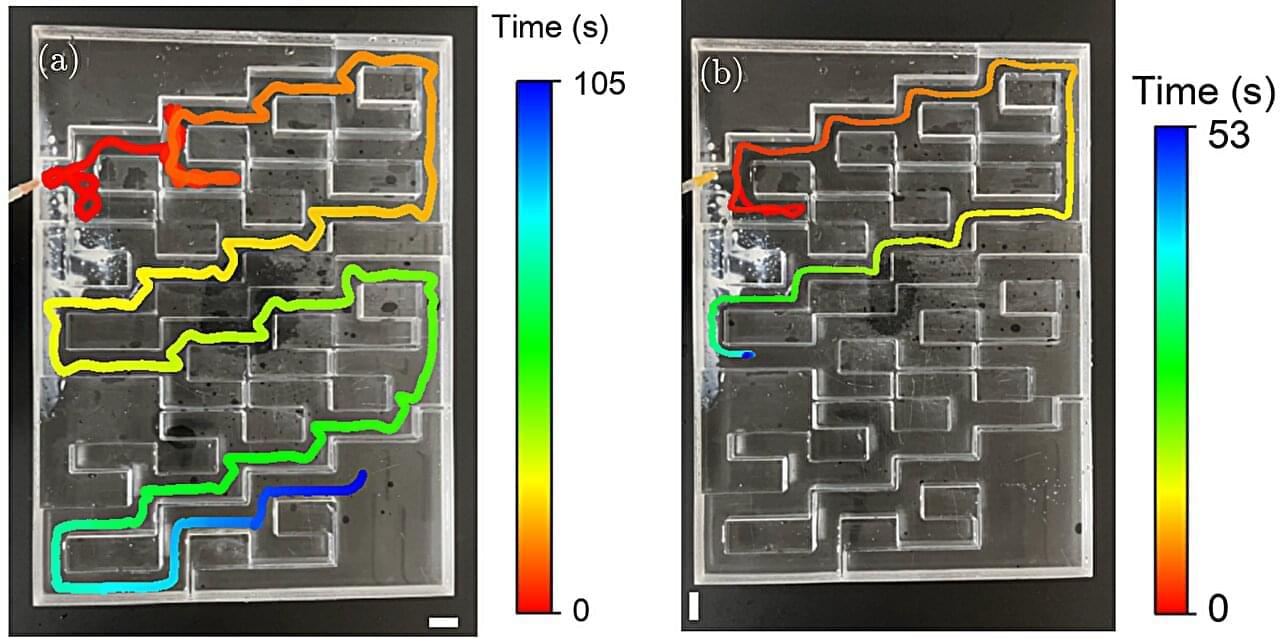
A recent study by a team of researchers led by TU Darmstadt has found that tiny amounts of liquid can navigate their way through unknown environments like living cells—without sensors, computers or external control. The tiny droplets can navigate autonomously, are able to detect obstacles from a distance and move reliably through complex mazes—without cameras or electronics. The reason for this is a mechanism that the research team refers to as “chemical echolocation.”
Here’s how it works: Instead of emitting sound waves like bats in dark caves, the droplets release small amounts of chemicals into their environment as they move. These chemicals spread throughout the environment and are reflected by nearby walls and dead ends. The returning “echo” subtly pushes the droplet away from blocked paths and toward open paths, thus guiding its movement.