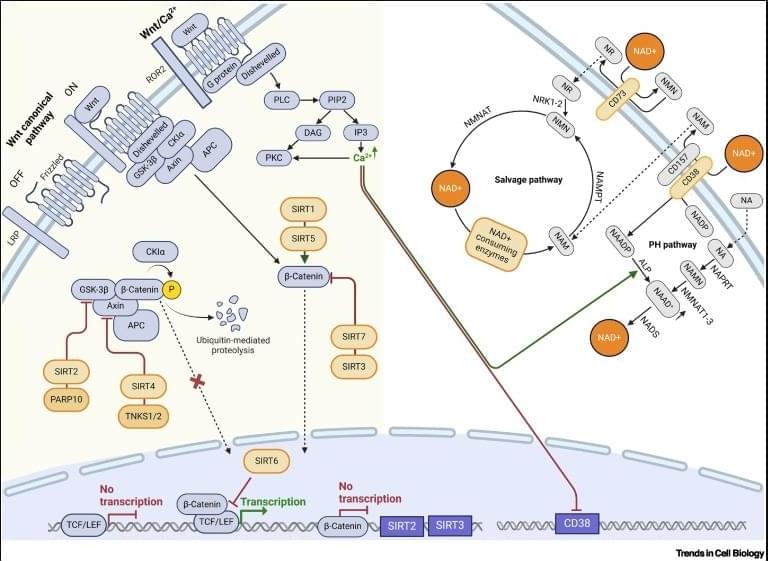
Wnt–NAD+ axis in stem cell function.
The Wnt–NAD+ axis is a fundamental regulatory hub in which metabolic state meets developmental signaling and it acts as a metabolic sensor that coordinates tissue regeneration with cellular energy status through compartment specific NAD+ pools.
Wnt signaling regulates NAD+ metabolism by controlling the expression of key biosynthetic enzymes and NAD+ consumers, while NAD+-dependent proteins modulate Wnt activity through direct interactions and epigenetic modifications.
Sirtuins exhibit tissue-specific and subcellular compartment-dependent roles in Wnt regulation where they function as activators or suppressors depending on the cellular bioenergetic state.
The Wnt–NAD+ axis maintains stem cell function and self-renewal capacity through metabolic/signaling integration, and its disruption during aging leads to declining regenerative capacity.
The progressive dysregulation of compartment-specific Wnt–NAD+ coordination contributes to stem cell exhaustion and multiple pathological conditions, indicating that therapeutic strategies must consider tissue-specific and subcellular targeting. sciencenewshighlights ScienceMission https://sciencemission.com/Wnt%E2%80%93NAD-axis
The intricate interplay between Wnt signaling and nicotinamide adenine dinucleotide (NAD+) biosynthesis has emerged as a crucial axis that influences aging and tissue regeneration. Wnt signaling, a key regulator of cellular proliferation, differentiation, and tissue homeostasis, intersects with NAD+ metabolism, a cornerstone of cellular energy balance and genomic stability. This relationship is mediated through shared regulatory pathways involving sirtuins, poly(ADP-ribose) polymerases (PARPs), and metabolic enzymes which are sensitive to cellular NAD+ levels. Dysregulation of either pathway is implicated in cancer, age-related decline, and impaired regenerative capacity. This review consolidates current knowledge of the Wnt–NAD+ axis and highlights its cooperative roles in maintaining tissue integrity and combating the effects of aging.